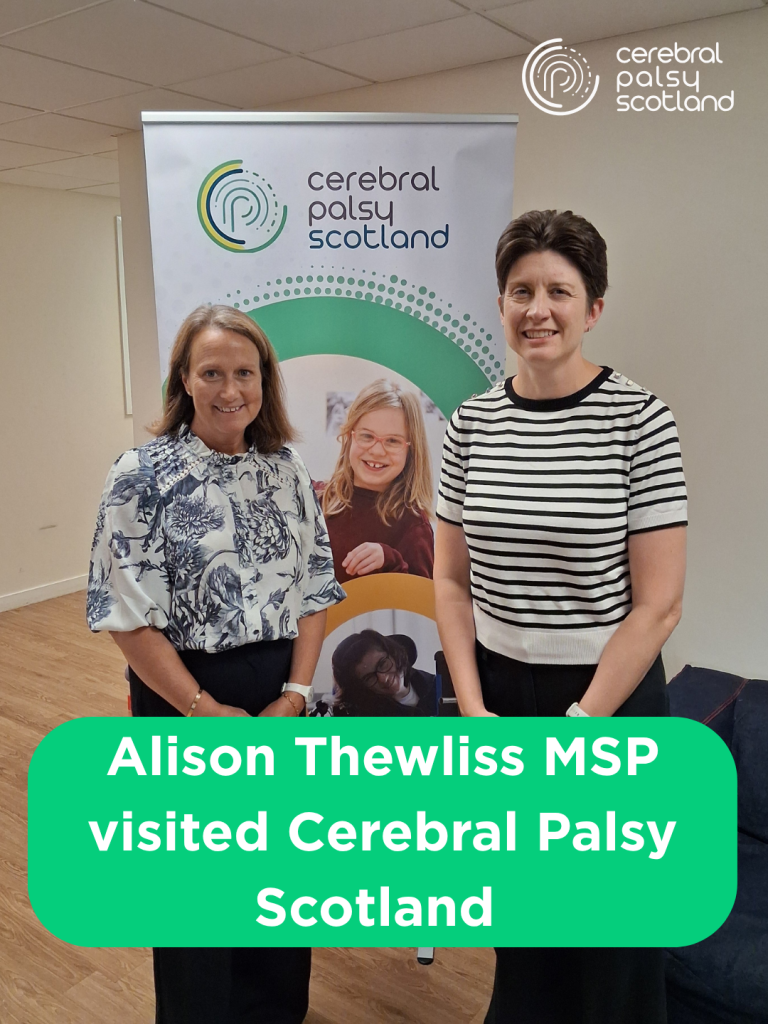
We were pleased to welcome Alison Thewliss, MSP and Minister for Community Care, to the Cerebral Palsy Scotland centre on Tuesday 18 August. The Minister met people with Cerebral Palsy and their families, as well as specialist therapists and members of the senior leadership team.
During the visit, Ms Thewliss met adults receiving condition-specific therapy from Cerebral Palsy Scotland and heard directly from them and their families about the importance of accessing specialist support.
The Minister also met Danielle Farrell, an adult with cerebral palsy and a member of the National Care Service Advisory Board, before taking part in a round-table discussion on the challenges facing people with cerebral palsy across Scotland.
Discussions covered the need for specialist support, the services provided by Cerebral Palsy Scotland, the complex health and social care landscape, and opportunities to improve outcomes for adults with the condition.
Ms Thewliss said about her visit, “I was pleased to meet people affected by cerebral palsy and the specialist staff delivering therapies at Cerebral Palsy Scotland’s Centre. I want everyone living with cerebral palsy in Scotland to receive the best possible care, at the right time and in the right place.
“It’s important that people living with cerebral palsy are able to decide what support they need and that each person’s pathway genuinely supports the individual in ways that are personalised, innovative, and tailored to their circumstances.
“I recognise and value the support that Cerebral Palsy Scotland provides to people of all ages. We will continue to work with NHS, third sector partners and people with cerebral palsy to improve services and drive up standards of care.”
Stephanie Fraser, CEO of Cerebral Palsy Scotland, said: “We were delighted to welcome Minister for Community Care Alison Thewliss to Cerebral Palsy Scotland and give her the opportunity to hear directly from people with cerebral palsy and their families about the support they need to live healthy, fulfilling lives.
“Cerebral palsy is a lifelong condition, but specialist support is not always available throughout a person’s life. Adults can experience significant changes in their health, mobility and support needs as they get older, yet there are currently no specialist adult cerebral palsy services in Scotland.
“Our services demonstrate the difference that specialist, multidisciplinary therapy can make. Therapy can help people manage their condition, prevent avoidable deterioration and maintain their independence, but access to this support needs to be recognised as an essential part of lifelong care.
“We welcome the opportunity to work with the Scottish Government to improve outcomes for people with cerebral palsy and ensure they are visible within Scotland’s health and social care planning. There is a real opportunity to make a lasting difference through early intervention, specialist training and condition-specific support.”
Cerebral Palsy Scotland called for greater recognition of the needs of people with cerebral palsy and highlighted areas where Scottish Government action could improve outcomes. These include enabling Self-Directed Support payments to be used for maintenance therapy, introducing routine cerebral palsy training for health, education and social care professionals, developing a national framework for children and adults with cerebral palsy, and improving national and local data collection.