
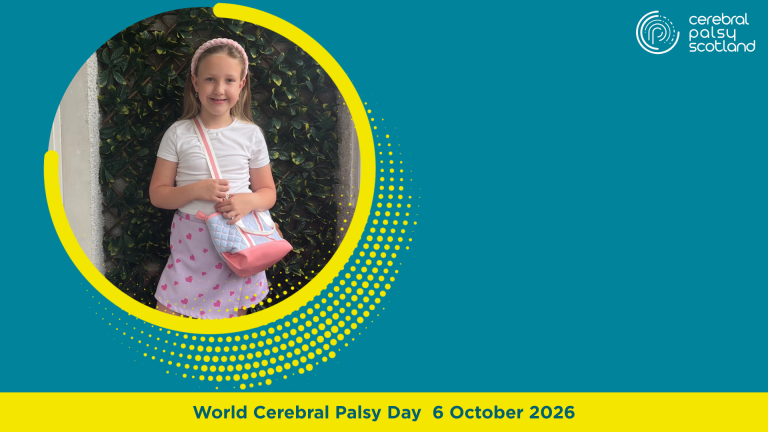
We recently spoke to Lucy, 7, and mum Pauline about what it is like living with Lucy’s cerebral palsy.
Pauline first noticed that something wasn’t right when Lucy was around two years old, as she was not quite meeting expected milestones and she had some physical weakness. She was still struggling to walk and couldn’t run as her legs were affected. After seeing paediatricians, Lucy was given an MRI and was finally diagnosed with spastic dysplasia in her legs.
When Lucy was younger, she was put on lots of medication and given support. However, because she has mild cerebral palsy, Pauline realised it was better for her to try and build strength through exercise. Lucy was put into ballet at the age of three. She struggled at dance and nursery at first, having to wear splints, which helped with falls but made it harder to get her ballet shoes on.
Over the years, Lucy has impressed her physios and has now been out of splints for two years. She dances almost every day of the week and doesn’t use any aids to help her. As she’s grown, Pauline says, Lucy has gained more awareness of her limits and how to work to overcome them.
Lucy – How does having cerebral palsy affect your life at school?
“Sometimes I need help because in school because I’m not allowed to run in the playground as I fall a lot. In school I have lots of support from my friends and I give talks in assembly about cerebral palsy during Cerebral Palsy Awareness Month in March.”
Lucy said that children at school often ask her lots of questions about her cerebral palsy. She is always happy to answer them as she likes talking about it and helping other children to understand cerebral palsy.
Learning new skills takes Lucy longer than her friends (something they learn in months might take her years). It is harder for her to learn the tricks that other children can do, but she tries her hardest and can eventually do them. Lucy competes in lyrical and jazz, sometimes in the Superstars section – a specific category for children with disabilities – but when this is not available, she competes in the regular competitions.
Pauline – How does Lucy’s cerebral palsy affect family life?
“It started off a lot scarier as we didn’t know how things would look in the future and we were learning as we go.”
Lucy has two older sisters and one younger brother. Her sisters have had to make sacrifices over the years as there were lots of things they couldn’t do as a family as they had to make sure Lucy could be included. However, Pauline says her sisters have been great and are so supportive of Lucy.
“As a family things have had to be adjusted over the years, but we’ve been absolutely fine with it.”
There have been times when the family have found it tough, Pauline went from working full time to part time, which meant the family lost income, in order to support Lucy with needs such as the regular hospital visits when she was younger. Pauline now focuses on supporting Lucy with her dancing as she recognises the importance of the activity to Lucy.
“Lucy has taught us a lot and she has been an inspiration.”
What would you like everyone to know about living with CP this WCPD?
“I have mild cerebral palsy, my legs always get tired and sore and I fall and go to lots of hospital appointments – too many, I can’t keep track! Sleep is horrible but I can do some things other kids can do I just need to put in a little more work.” – Lucy
“I would like people to understand that cerebral palsy doesn’t define someone – children and adults with cerebral palsy have dreams and goals, their journeys can just take a different route and might take a little longer. Anyone with cerebral palsy or a disability can be inspirational.” – Pauline
To help support children like Lucy with therapy please make a donation to our World Cerebral Palsy Day appeal: