Education Secretary visits Cerebral Palsy Scotland as we call for greater specialist support for people with cerebral palsy
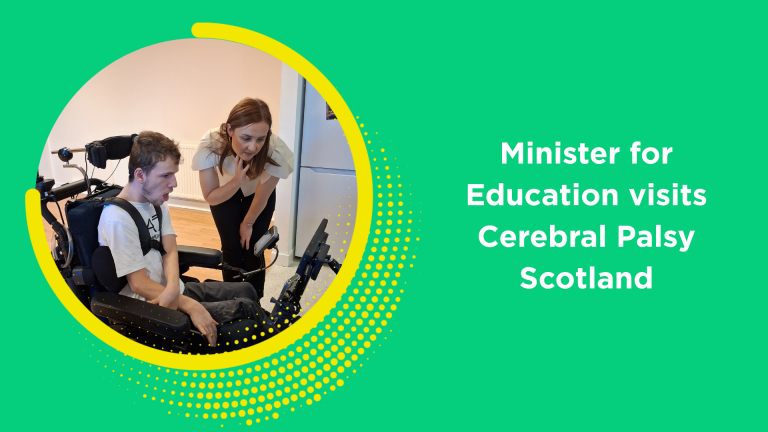
Màiri McAllan, Cabinet Secretary for Education, Culture and Gaelic, visited Cerebral Palsy Scotland’s specialist therapy centre in Glasgow on Wednesday 23 September, meeting children, young people and families with lived experience of cerebral palsy, alongside the charity’s multidisciplinary team of specialist therapists.
The visit provided an opportunity to discuss the experiences of children and young people with cerebral palsy in education, as well as the importance of ensuring people with the condition can access appropriate specialist support throughout their lives.
Cerebral Palsy Scotland is calling for greater access to specialist knowledge, expertise and advice across all educational settings, including early years, primary and secondary schools, schools supporting children and young people with additional support needs, and further education settings. We also want to see improved support for pupils who use Augmentative and Alternative Communication (AAC) and assessment based on individual need.
While discussions with the Education Secretary focused on education, Cerebral Palsy Scotland also highlighted the need for a more proactive approach to health and wellbeing across the lifespan of people with cerebral palsy.
The Scottish Government currently provides £2 million each year to NHS Boards to deliver annual health checks for people aged 16 and over with learning disabilities. The programme aims to address health inequalities and identify unmet health needs, with the Scottish Government describing annual health checks as an important part of preventing premature deaths and improving health outcomes. There has also been investment of £3 million by the Scottish Government into heart and lung MOTs, to be delivered by Chest, Heart and Stroke Scotland. Cerebral Palsy Scotland believes there is an opportunity to build on this approach and develop a specialist annual health and wellbeing review for people with cerebral palsy.
Stephanie Fraser, Chief Executive of Cerebral Palsy Scotland, said:
“We were delighted to welcome the Education Secretary and to share directly with her the experiences of children and young people with cerebral palsy and their families.
We are calling for a more proactive approach to supporting people with cerebral palsy. The Scottish Government has recognised the value of annual health checks for people with learning disabilities and heart and lung checks for those more likely to experience poorer health outcomes. This approach helps to identify needs earlier and connect people with the right treatment and support.
We believe people with cerebral palsy deserve the same opportunity to benefit from a proactive approach to preventative and specialist care. Cerebral Palsy Scotland has the specialist expertise to work alongside NHS, education and statutory services to help make this possible, and we are keen to work constructively with the Scottish Government to improve outcomes for people with cerebral palsy throughout their lives.”
Cerebral Palsy Scotland will continue to work with the Scottish Government to identify opportunities to improve outcomes for people with cerebral palsy across Scotland, from early years through to late adulthood.