• Skip to primary navigation
  • Skip to main content
  • Skip to primary sidebar
  • Skip to secondary sidebar
  • Skip to footer

Cerebral Palsy Scotland

  • Facebook
  • Instagram
  • LinkedIn
  • Home
  • Who we are
    • Our mission and values
    • What we do and why
    • Our story
    • Our team
    • Vacancies
    • Key documents
    • Our centre
  • How we help
    • Therapy for adults
    • Therapy for children
    • Support
    • Training
    • Campaigning
    • Our impact
  • What’s on
    • Events
    • Annual conference
  • Other support
    • Support directories
    • Financial support & equipment funding
    • Advice from parents
    • Online support groups
    • Support for schools
    • Legal support
  • Get information
    • All about cerebral palsy
    • Children
    • Adults
    • Therapy & treatment
    • Oral health
  • News
    • News
    • Blog
  • Get involved
    • Friends of Cerebral Palsy Scotland
    • Raise money
    • Leaving a gift in your Will
    • Corporate partners
    • Philanthropy and major donors
    • Other ways to give
    • Other ways to get involved
    • Trusts
    • Our promise to you

Support for adults with CP

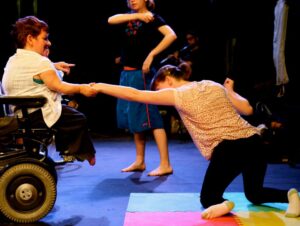
Image of two hands - one person's hand is supporting the other person's hand.

Statutory services for people with cerebral palsy are concentrated in children’s services and education. There is no specialist therapy service for adults with cerebral palsy in Scotland, apart from the adult services provided by Cerebral Palsy Scotland. This must change.

SIGN guidelines for adults with cerebral palsy

Cerebral Palsy Scotland are requesting that following the publication of the NICE guidelines for adults with cerebral palsy in January 2019 the Scottish Government enable the publication of the equivalent SIGN guidelines for adults with cerebral palsy in Scotland. The NICE guidelines aim to improve health and wellbeing, promote access to services and support participation and independent living.

Implementation of SIGN guidelines would ensure that those living with CP are treated on an equal basis as those living with other neurological conditions, such as epilepsy or Parkinson’s Disease. They would additionally give the right to an annual review with a specialist in CP to ensure this non-static condition is managed before physical changes become entrenched.

Survey results: Statutory services not meeting the needs of the majority

We surveyed the cerebral palsy community in Scotland in November 2021. A summary of the findings show that much more support is urgently needed.

When asked if NHS services are meeting your needs:

  • 45% said NHS services were ‘not at all’ meeting their needs
  • 20% said NHS services were meeting their needs ‘a little’
  • Only 11% said NHS services were meeting their needs ‘fully’ or ‘a lot’

Many are seeing key NHS services less than once a year:

  • 34% see an NHS physiotherapist less than once a year
  • 33% see an NHS occupational therapist less than once a year
  • 32% see an NHS neurologist less than once a year

Many are relying on non-NHS services:

  • 40% of respondents use private therapy, and 53% use Cerebral Palsy Scotland services.

People are experiencing poor transitions

  • Of those who had experienced a transition in the past five years (from children’s to adults’ services, or adults’ to older people’s services), 86% described the experience as “very poor” or “poor”

About the respondents:

  • Over half (58%) need ‘full’ or ‘a lot’ of support to complete daily tasks
  • Nearly half (48%) have a learning disability
  • A fifth (21%) experience a ‘great deal’ or ‘a lot’ of pain

Comments from survey respondents:

“Currently having free sessions from CP Scotland 1st one was amazing and a breath of fresh air that someone wanted to help me rather than assign me to the scrap heap”

“I have to pay for private neuro-physiotherapy twice a month and have done for many years because the NHS therapy service is so ill-equipped to meet the needs of adults with CP. This is a financial burden that I should not have to bear.”

“Physiotherapy service diminishes the second you transfer to adult services .It feels like you have to ask for physio now instead of having a regular plan of treatment”

“Child services were reasonably good. There were always regular reviews with the neurologist which was reassuring. But we didn’t transfer to the care of a neurologist in adult services – just told to go to GP if need help.”

“I had no real transition to the older people’s team and the experience was horrendous”

“I have to pay for a lot of the treatments that support my health as the NHS are unable to fund or provide them, at least not often enough”

“Cerebral Palsy Scotland is the only support we have found, and that was just this year. For 16 years, there has been no support at all.”

“Cerebral palsy is forgotten about in adults and everything is a learn to live with it approach”

“As a person who is experiencing the effects of ageing with CP I have struggled to receive appropriate NHS provision for many years. My GP service is very good but they can only offer services that exist and what services do exist are not fit to meet the needs of adults with CP. I have attended the local rehab centre many times and I have been shocked and upset at their lack of interest in me as a person and the physical issues I face due to ageing. A few staff have tried to offer treatment but the overall response to my needs has been ad hoc and lacking urgency.”

Using a communication aid – Barry’s experience

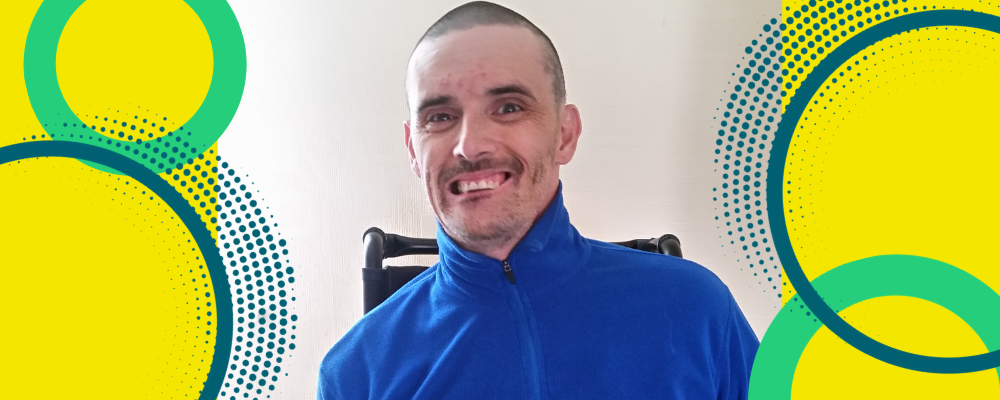
Image of Barry smiling at the camera

My name is Barry Smith and I am 42 years old. I am from Scotland and I have cerebral palsy.

Down to this I use a power wheelchair and I speak with a Lightwriter too, but this don’t stop me making the most of my life. 

Before I go on with this I am going tell you how I write this up, down to my hands is too jumpy to type. I use my toe to type this up, which is a skill too.

When I was about 23 years old I lived in Red Cross in Irvine. When I started there I was a part of the Gateway project which was for 16 to 26 year olds to show us new skills. One of the best things I got out of the project I was able go on a course call Part and Polly making with the Gateway. One of the things I got from doing the course I was told no matter what you are able to do anybody got a skill even just a happy face.

How my communication aid helps me

In 2006 I made my goal which was to get my own home what I am still in today. I don’t think I would be able to this without my Lightwriter.

Then two years later I did a talk about my life at Communication Matters Conference which I loved on my SL35. When I was down at the conference I saw the SL40 what was the new Lightwriter which was just coming out. What I remember I got to try this – what I loved about this you were able to text on it so I send the first text in my life to my Mum. She couldn’t believe it was from me, because she knew I couldn’t send texts down to my hands. My Mum phone the person who I was with, and he told it were from me on a new aid.

A few months later Ayrshire got me one. Once again I text my Mum and it felt like Christmas. In 2011 I got SL40+ – that mean I could phone people on it and they could call me on. Then I started doing little project in Scotland for the Right to Speak what I loved do for them. In 2012 I help with a green paper for government. 

What I do not like being a communication aid user

When I was using the Connect Lightwriter as you know people could telephone with this. A few times I trying to make a business call. When the person answers and I said who I was and I told them I am using a communication aid to telephone them. The person who I were talking to told me they were sorry I needed to end this call, down to you aren’t using your own voice under the data act. When I put the telephone down I felt disabled and so mad. I feel my communication aid were stopping me in my life. Now I think people should know about this. 

Tags: Cerebral Palsy

All Party Parliamentary Group on Cerebral Palsy publish first report

The All-Party Parliamentary Group on Cerebral Palsy has published its first report, focussing on the issue of early intervention.

Published on 25 March, Early identification, intervention and pathways of care of infants and young children with cerebral palsy: The case for reform and investment looks at the issues of early identification and intervention, pathways of care, and centres of excellence.

Established in December 2020, the All-Party Parliamentary Group on Cerebral Palsy provides a forum for Parliamentarians to better understand the challenges faced by individuals and families affected by cerebral palsy, and brings together organisations from across the UK to focus on CP.

The report makes in total 11 key recommendations for reform and investment that have the potential to make a huge difference to children with cerebral palsy and their families. These include:

  • All health authorities should be required to implement the NICE Guidelines and Quality Standards on the management of cerebral palsy as a minimum standard.
  • The Government must fund and ringfence streamlined pathways of care for children at risk of neurodisability.
  • The Personal Child Health Record, or ‘red book’, should be modified to check for signs of abnormal motor development.

Cerebral Palsy Scotland CEO Baroness Stephanie Fraser of Craigmaddie sits as an officer on the group and Cerebral Palsy Scotland contributed to the development of this report. Commenting on the report, Baroness Fraser said:

“The report makes a number of important recommendations, including calling for a national register of people living with cerebral palsy in the UK. This is something Cerebral Palsy Scotland has been actively asking the Scottish Government to support as well. If we are to have effective services and good care and educational pathways for children with CP, a national register must be established because, simply put, if you’re not counted, you don’t count.

“Although this report focusses on early intervention and children, the APPG’s remit is for people with CP of all ages, their families and the professionals who support them. I look forward to continuing to be involved in the group’s work as it develops. There is much that we can highlight from a Scottish perspective, including health and social care integration, the Neurological Care and Support Framework for Action and much more.”

The All Party Parliamentary Group on Cerebral Palsy is co-chaired by Mary Foy MP (Labour, City of Durham) and Paul Maynard MP (Conservative, Blackpool North and Cleveleys).

Next sessions of the group will look at provision for school-aged children with cerebral palsy, and interventions, pathways and outcomes from both educational and healthcare perspectives.

Survey findings – the impact of Covid restrictions for people with CP

Image of hand raised

Findings from our latest survey show that Covid restrictions are continuing to have a negative impact on people with CP’s physical and mental health.

In February, we asked you to complete a survey to find out how lockdown was affecting people in Scotland with cerebral palsy (CP), their families and carers. These findings build on the information received from two previous surveys Cerebral Palsy Scotland carried out in May and September 2020.

You can read the full report here.

Key headlines include:

  • The negative impact restrictions are having on people’s mental health has significantly increased to affecting 60% of respondents.
  • Decline in wellbeing was not restricted to the person with CP but 44% felt that it had also impacted on other people in the family.
  • 43% of people are reporting that their physical health continues to deteriorate.
  • 63% reported that their care arrangements had still not returned to pre-Covid levels.
  • 53% feel that their family has become more isolated
  • Most people have either already been vaccinated or want to be vaccinated. Only 12% reported that they did not want to be vaccinated.
  • 82% said that they wanted everyone who lives with them and cares for them to be vaccinated as soon as possible.
  • 83% were happy with the level of support they were receiving from Cerebral Palsy Scotland, even though the imposition of restrictions has delayed input for some groups.

Impact on mental health

The strain of community services continuing to be closed, including for children the closure of schools, and the limited availability of respite or other opportunities to stay connected to their community has a greater impact for people with CP and their families than compared to the wider population due to the reliance on these services for people to be able to stay fit and well.

As restrictions have continued and particularly during the lockdown since 26 December 2020, 60% of people with CP and families reported an increased deterioration to their mental health and wellbeing. Mental health has now overtaken concerns about deterioration in physical health, which was reported by 43% of survey respondents.

Whilst 22% of families report that they have become closer, 53% feel that they have become even more isolated and whilst the restrictions have certainly impacted on the mental health of the person with CP, 44% report that they have also impacted on other people in the family.

With increased deterioration in mental health on top of increased isolation, there is a general sense within the responses of feeling unsupported and that disabled people are being forgotten and ignored.

Care arrangements

63% of respondents reported that any care arrangements they had in place previously were not yet back to the levels they were before Covid-19, which is a slight improvement from the 71% reported in September 2020. However, there remains over 41% who remain totally reliant on family carers.

Accessing healthcare

In terms of healthcare, only 25% of respondents said that they have been able to access all the support they need from health professionals and only 23% reported that equipment needs were being met.

However, 70% of respondents have been able to access healthcare either for their cerebral palsy or for other issues. The majority of this (65%) is either online or via telephone.

Cerebral Palsy Scotland continue to note with concern that evidence of decline in condition is not being recognised or understood by professionals, for example the difficulty in accessing physiotherapy, appointments postponed, and lack of access to specialists in cerebral palsy.

The findings from the February 2021 survey have been collated into a report which is being shared with Scottish Government. Cerebral Palsy Scotland is continuing to take part in discussions with Scottish Government about opportunities to support people with CP as the country moves through the coronavirus outbreak.

How Cerebral Palsy Scotland can support you during Covid

We are committed to ensuring that Cerebral Palsy Scotland continues to provide support for anyone, with any form of CP, of any age and from any area of Scotland, through our CP Connect programme.

Cerebral Palsy Scotland’s CP Connect service is offering free therapy and support to children and adults.  CP Connect is here to help in whatever way best suits you – it may be a conversation, an online chat, an onward referral, or it may be getting some virtual or in-person therapy. Find out more and sign up.

COVID 19 Pandemic: Life as a hospital doctor with CP

Kirsty Colquhoun picture

Kirsty Colquhoun is a consultant geriatrician and has CP. Her blog looks at life working in a COVID ward during the pandemic, the impact of working through the crisis, asking for expert support when needed, and why #StampOutThe Gap matters to her.

The first patient I successfully discharged home from my COVID ward was an older lady with Cerebral Palsy, we were all delighted when she got home, as we were for all our patients. 

I work as a consultant geriatrician in Glasgow.  This means that I look after older adults, particularly those who are frailer.  COVID, for the group of patients I care for has been catastrophic.  Age is the biggest risk factor for having a poor outcome if you contract COVID.  I have spent the past 8 months working in older adult COVID wards.  At one point, Older Peoples Services, Glasgow Royal Infirmary, where I work, was looking after 10% of Scotland’s COVID inpatients.

This year has been exhausting and brutal, physically and emotionally, but whatever I have felt has never been as bad as what my patients and their loved ones have gone through.  There has been tragic stories like people losing both of their parents within days of each other, that is heart-breaking to witness, and I will never forget those patients and their families.  Most of the patients who I look after, would not survive an intensive care admission, however, we still deliver the highest possible care we can give, tailoring it to the needs of that patient.  The first patient I successfully discharged home from my COVID ward was an older lady with Cerebral Palsy, we were all delighted when she got home, as we were for all our patients.

Kirsty Colquhoun pictureHowever, it is not all doom and gloom in the NHS.  While there can always be things you look back on and think you could have done differently, everyone working has pulled together like never before and tried their absolute best.  This time last year we had no known treatment for COVID – now we have several.  The scientists have worked extraordinarily hard.  I was lucky enough to have the opportunity to enrol in the Oxford vaccine trial last June (and as I subsequently found out in January – lucky to have been in the COVID vaccine group).  Just 6 months on that vaccine was being rolled out to give us a route out of this pandemic, which is amazing.  We have tried to continue as much of our other non-COVID work as possible.  For example in the work I do with older cancer patients we have been using virtual means.  COVID has given us an opportunity to change the way we work and some of that may be for the better.

Sadly COVID has supercharged already pre-existing inequalities.  You are more likely to die of COVID if you live in a deprived area.  For some there is a view that if you are older, have a disability or a chronic health condition you are somehow less valuable.  That is wrong and we must push back against that mind-set. I would fall into the category of having a disability, it seems to surprise some that someone with a disability could work (more than full time) as a consultant, particularly work in COVID wards.  But why, disabled people are working in all areas of society, just like everyone else.  I can assure you my life is no less valuable than the next persons, nor those of any disabled person.  During the pandemic there has been a focus on wellbeing and kindness.  Let us come out of this a fairer society and do our upmost to tackle these inequalities.  As this pandemic has shown, no one knows what the next day holds or who could acquire a disability or chronic health problem.

When we are out the other side of this we will all need time to recover.  For some it will be from the grief of losing loved ones, for others it will from financial hardships, for some it will be from the exhaustion and emotional toll of trying to balance working from home with home schooling and for many it will be the from the emotional strain of the past year!  A surprise challenge for me has been the physical impact the pandemic has had on my cerebral palsy.

I normally carefully balance long working hours with a mix of marathon outdoor swimming (I hoped my swimmers lungs would stand me in good stead if I caught COVID on the wards), Pilates and weights.  But all that disappeared.  I was standing longer at work, sitting longer at home and doing less of the things that keep me on my feet.  By last month I was in much more pain than usual and my function had deteriorated to a level I cannot recall as an adult.  It is at that point that you realise there is really no services easily available for adults with Cerebral Palsy except if you go to the private sector or the charity sector.  I have to admit I was scared, scared that this was my new normal, and that the independence and career I had worked so hard to achieve was changing.

I have privately had to see a musculoskeletal physio, who has been a great help.  However, I have had my first session with Cerebral Palsy Scotland.  I have had a full top to toe MOT by a Cerebral Palsy Specialist Physio.  Everything from the way I sleep to the way I stand has been looked at.  I know I will not only come out the other side of this as I was but have the opportunity to come out better. This is why the #StampOutTheGap campaign is so important.  People with Cerebral Palsy need and deserve the same access to specialist services as anyone else would who have a health condition or disability.

I realise I am lucky, throughout the pandemic, I have been able to come into work and do a job that I love and no matter how bad things have felt it is always a privilege to do that job and I would never want to do anything else.  I have had the support and kindness of the most amazing colleagues and that human contact is something so many people have not had this year.

I work in a Department with some exceptionally inspiring people, the first female president of the Royal College of Physicians and Surgeons, the current President of the British Geriatric Society.  Excellence is expected, disability or not, and that is what I want and strive for.  But just as important is the ethos of kindness, support and wellbeing.  I am being given the time and support to get better and I wish I could bottle the inclusivity that I experience for others.  The day I had to take some time off, my COVID ward became a non-COVID ward as cases drop.  I am glad I made it through to that point.  I look forward to returning in a couple of weeks, I am sure better and hopefully in brighter times.

Kirsty Colquhoun: Consultant Geriatrician in NHS Greater Glasgow and Clyde, Subdean Glasgow University Medical School for Glasgow Royal Infirmary, Fellow of the Royal College of Physicians and Surgeons – Physician Representative of the Inclusion Advisory Board, Secretary for the British Geriatric Society Oncogeriatric Specialist Interest Group, Trustee CP Scotland.  Has Cerebral Palsy, Diplegia.

Tags: Cerebral Palsy, covid-19, Physiotherapy

  • « Go to Previous Page
  • Page 1
  • Interim pages omitted …
  • Page 30
  • Page 31
  • Page 32
  • Page 33
  • Page 34
  • Interim pages omitted …
  • Page 59
  • Go to Next Page »

Search

Quick links

  • Ways to give
  • Our mission and values
  • All about cerebral palsy
  • Therapy for adults
  • Therapy for children
  • Campaigning

Copyright © 2025 · Enterprise Pro on Genesis Framework · WordPress · Log in

Cerebral Palsy Scotland logo

Cerebral Palsy Scotland
Bradbury House
10 High Craighall Road
Glasgow, G4 9UD

t: 0141 352 5000
Phone Number for Cerebral Palsy Scotland
Fax Number for Cerebral Palsy Scotland
info@cpscot.org.uk
Email for Cerebral Palsy Scotland
cerebralpalsyscotland.org.uk
Website for Cerebral Palsy Scotland

  • Facebook
  • Instagram
  • LinkedIn
OSCR logo
Nationa Lottery Community Fund logo