• Skip to primary navigation
  • Skip to main content
  • Skip to primary sidebar
  • Skip to footer

Cerebral Palsy Scotland

  • Facebook
  • Instagram
  • LinkedIn
  • Home
  • Who we are
    • Our mission and values
    • What we do and why
    • Our story
    • Our team
    • Vacancies
    • Key documents
    • Our centre
  • How we help
    • Therapy for adults
    • Therapy for children
    • Support
    • Training
    • Campaigning
    • Our impact
  • What’s on
    • Events
    • Annual conference
  • Other support
    • Support directories
    • Financial support & equipment funding
    • Advice from parents
    • Online support groups
    • Support for schools
    • Legal support
  • Get information
    • All about cerebral palsy
    • Children
    • Adults
    • Therapy & treatment
    • Oral health
  • News
    • News
    • Blog
  • Get involved
    • Friends of Cerebral Palsy Scotland
    • Raise money
    • Leaving a gift in your Will
    • Corporate partners
    • Philanthropy and major donors
    • Other ways to give
    • Other ways to get involved
    • Trusts
    • Our promise to you

My life as an ambulatory wheelchair user – Mhairi McKendrick

As part of Cerebral Palsy Awareness Month, Mhairi shares her story of being an ambulatory wheelchair user and the stigma that she has faced.

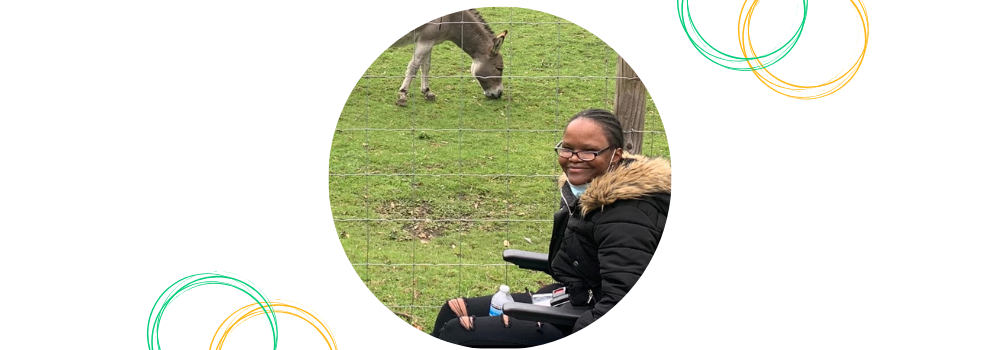
My name is Mhairi McKendrick and I have been living with cerebral palsy for 23 years now. As it is Cerebral Palsy Awareness Month, I thought I would share my thoughts on the stigma and misconceptions around being an ambulatory wheelchair user. If you don’t already know the definition of an ambulatory wheelchair user is, from my understanding it is: Someone who can walk but cannot walk for long distances or needs support to do so.

When most people meet me, I am in my wheelchair, because I meet most new people in my life at college. This definitely changes their view of me as a member of the class, they don’t involve me as much as the other people in my class, I should mention that I am the only person in my class that uses walking aids or use a wheelchair. It could just be a personality clash, but I’m not so sure. It doesn’t help that I am quite introverted when in my everyday life.

The way they treat me just shows that the stigma of fear of the unknown is still rampant in today’s society. It kind of annoys me because I have done nothing to my knowledge to make them feel weird around me. Like when I drop something when I am sitting in my wheelchair, sometimes I can pick up the item by getting out of my wheelchair but most of the time I have very little to no energy to do this. When this happens I have to ask my classmates for help and I cannot help but think that they’re thinking ‘Why does she need help?? she can walk!’ but they never ask me why I need the help.

From family testimonials, I know that it took me until I was 3 years old to walk unaided for 100 meters. This was a massive relief for my parents and a big raspberry to the face for the doctor that told them I would probably never walk or talk independently. As you now know I can do both of those things. One of the biggest blessings that has helped me maintain my stamina during my childhood specifically week-long physio that I had access to from the age of 2 till I finished high school. Without them I would not have kept the amount of stamina that I have.

Throughout the pandemic and even then, I have definitely lost a lot of it through not having the motivation or opportunity to walk during that time. The biggest stigma I have faced as a part time wheelchair user is something I touched on earlier- the confusion over why some ambulatory people need wheelchairs. For me its 2 factors: pain and energy levels.

Sitting here and writing this article: my ankles ache, my lower back is throbbing and I think that if I try to stand up I may just fall over or severely stumble over my own feet. It could be a whole other reason that someone who can walk makes use of a wheelchair. It is up to us as a society to normalise every version of wheelchair using there is. Not all wheelchair users are paralysed. Not all people who use a wheelchair are unable to communicate.

Here are some statistics about Cerebral Palsy: 1 in 3 are unable to walk. About 40-50 percent of individuals with cerebral palsy are wheelchair users.

The energy used to move by a person with cerebral palsy is three to five times more than that of a person without cerebral palsy. I am extremely grateful for the opportunity I have had throughout my life. So that I gained the skill of walking and had access to a manual wheelchair so I could access the world.

Tags: Advice Information and Support, Cerebral Palsy, Disabled People, Mobility, Physical Disabilities, Wellbeing Services, Young people support

Exploring the connection between cerebral palsy and anxiety – Guinni Baker

As part of Cerebral Palsy Awareness Month, Guinni shares her story of being an adult with cerebral palsy and experiencing anxiety. 

So I’m an adult now and cerebral palsy hits differently than it did when I was a kid. There are no regular doctors’ visits or physio sessions – no one worries about growth-spurts and leg lengths any more. I don’t get called names in the playground, (not that I’m aware of anyhow.. though I did recently find a note in a social area that read ‘Ms Baker leans and walks.’ I’m a depute head teacher in a secondary school and you bet I do, wee yin! Thanks for noticing!), I’m pretty aware of what I can and can’t do and moderate as needs be. The children in school almost instinctively swirl round me on stairwells, ensuring I always have my trusty bannister to my right and family, friends and colleagues are amazingly supportive and understanding. What I find difficult can mean that someone else takes on a little bit more and its so appreciated. So many little points of assistance in familiar spaces with familiar faces which make you feel comfortable and – I don’t know how else to say it – normal.

I wanted to talk about anxiety in this blog. It’s been a huge and, at times, pretty crippling part of my life. I had a complete breakdown around twenty years ago and had two awful years recovering from it. I didn’t even know what anxiety was at the time but I could barely function and genuinely felt I was losing my grip on life completely. Looking back now I can see that what happened then wasn’t isolated. But I had no knowledge or understanding – just fear.

I couldn’t do my hair as a teenager. It drove me crazy. I was 16 before I successful managed a ponytail and that’s still about the most I can do with it. The frustration and upset of that was out of all proportion to what I was trying to do but hours in front of the mirror and a hairbrush that got chucked across the room was not unusual.  (Shout out to my two sisters who were always happy to save the day, the mirror and my sanity lol)

I recently had an adult assessment at Cerebral Palsy Scotland and asked them about the link between cp and anxiety. Was there one? The physiotherapist said that I have to work harder to get to the baseline of daily activities and over time that can cause stresses and anxiety. This really hit home for me. I don’t like change – never have but I started to wonder if this could go some way to explaining that? Staying in familiar circumstances means I don’t need to rev so hard to get by – in familiar places and surroundings I know what to do. I don’t need to wonder if I’m going to hit a wall; get stuck; can’t do it; need help in an unfamiliar place with unfamiliar people. That’s no way to go through life though and I do fight it as much as I can. I especially hate travel – that just seems to click all my cp buttons. I like being places though so every holiday planned is a love/hate/fear three act play. Never regretted going anywhere though!

I went through the worst of it before having my children – and I’m so glad I did. Having children is such a physical endeavour – in every way – and I found a lot of it painstaking! 52 poppers to change nappy / vest / baby grow. I wouldn’t bathe either of them as babies- my husband did it until they could sit up and don’t even start me on car seats and buggies!! My son, as a baby, would instinctively roll towards my dominant hand when I went to lift him from his cot. That always made me smile.

They are both now teenagers and help me in so many ways daily. My daughter stopped me from referring to my ‘bad hand’. She said I shouldn’t talk about it that way.

So now as an adult the challenges are different. I don’t want to restrict myself because I’m scared I can’t do something immediately and comfortably. No one ever said no when I asked for help and no one should ever feel too proud to ask for help when they need it – whether it’s carrying drinks back from the bar or talking about mental health – there’s always someone who will listen and move you on a little.

In the last year I’ve tried to take far more pride in what I can do rather than focus on what I can’t. I feel more connected to my body and I try to develop that connection in the gym and on walks so I can take pride in the progress I make (feeling wee, hard muscles on my cp side following my shaky efforts in the gym gives me total joy!). So for my final blog of CP Awareness Month I’m going to leave you with my top tips:

  • Develop what you can – maintain what you can. Move as much as you can.
  • Take help when you need it – don’t avoid experience and never make a decision based on fear
  • Talk about mental health. Saying you’re feeling anxious today should be as natural as saying ‘ you’re getting cold’.
  • Get in touch with CP Scotland. Their support, warmth, knowledge and kindness is amazing
  • And finally, always carry hand gel if bannisters are a necessity for you lol

Tags: Advice Information and Support, Cerebral Palsy, Disabled People, Education, Physical Disabilities, Support for Adults, Wellbeing Services

Living as a person of colour with cerebral palsy – Ruthanne Miller

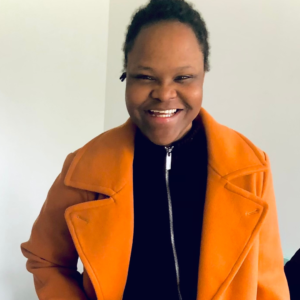
Hello, My name is Ruthanne Miller, I’m 26 years old and I am from London, I have Diplegia, cerebral palsy.
I also have chronic pain and as a person of colour in my personal experience when I tell medical professionals that I am in pain I feel like they do not understand my condition or severity, and they imply it’s in my head. This is because as I am diplegic but able to get to my local doctors without need of my chair, they see me as capable and express dismissive actions. In order to combat this I have utilised my PA’s to come with me to my appointments which helps express the gravity of the situation.

When not in pain I love to go to concerts with my friends. Sometimes it is hard to socialise, it can be a challenge to make new friends, my social group *SHINE* put an end to this and I’m excited to see them again. I like to bring awareness to cerebral palsy and other disabilities on social media as I believe awareness is key.

In the future I would like to work with children with disabilities, as one of my most fond memories is enjoying time with my teaching assistant and them helping me in my starting steps to life. Towards this goal I have completed my level one Maths and English at college and will soon start my level 2. I used to see revising as an obstacle but as I have set a goal That I WANT I know that I can get it done which makes studying and growing somewhat fun.

As a black person there are certain stereotypes you have no choice but to overcome such as, “Your strong don’t talk about how you feel” this one is a very self-destructive and mentally draining.

Another thing they say is … “You have no choice but to outperform everyone else if you want to even slightly stand out” this gives you a feeling of no self-worth and makes it hard to appreciate yourself and your achievements. I make it my duty to surround myself around positive people, which in this day and age is like a needle in a haystack – so I’m thankful for who I have.

I think that more education should be taught in schools about all disabilities not even just cerebral palsy and the fact that not all disabilities are visible. In the future,  I hope to see a more inclusive society and better understanding of what Cerebral Palsy is in adults, I can’t wait to see this day.

Tags: Advice Information and Support, Cerebral Palsy, Disabled People, Education, Physical Disabilities, Support for Adults, Wellbeing Services

How I followed my dreams and started my own business

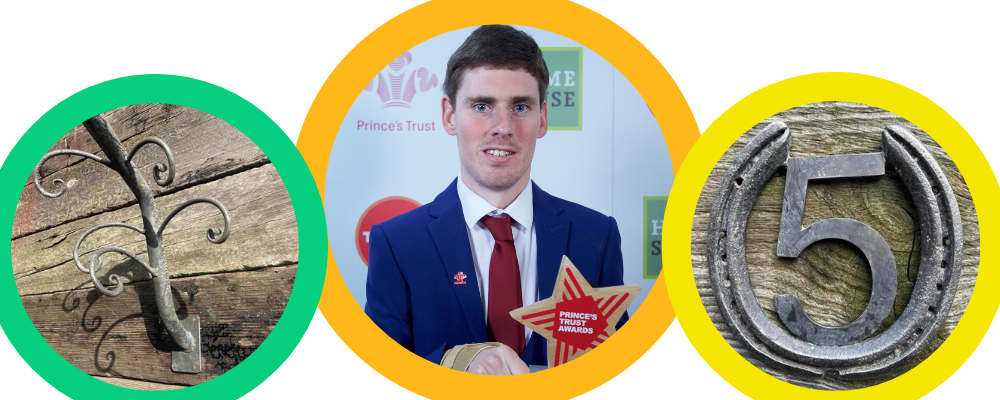
Image of Jack, a young man holding an award. There are two other photos of Jack's metal art - a bird feeder made with an exhaust pipe, and a house number '5' inside a horse shoe.

I’m Jack, I’m 28 from Clydebank. I work as a metal artist/sculptor who creates art from car parts, horseshoes and mild steel and I’m the business owner of Salvaged Metal Art.

When I was about eight years old I helped my uncle weld hinges onto an old gate post. Not thinking this would make an impact on my future I just concentrated working on and learning about cars for the next number of years, as this is what I wanted to do as a career. My experience at both primary and secondary school was not a positive experience as I was bullied throughout my time there due to my cerebral palsy. My cerebral palsy affects me on a daily basis as it restricts me on some things I would like to do by myself. I often suffer sore backs and stiffness due to my cerebral palsy.

My experience at college wasn’t positive either as I was bullied in college as well when I got into the mechanics course. During the year long course I was bullied on a daily basis. A month or so before the course was due to end two of the lecturers spoke to me to tell me that I couldn’t get onto the next level of the mechanics course. This is when I told them I could try welding. They told me this would be too hard for me as well, but they didn’t know that my uncle who has been a welder for 40+ years was willing to take his time to teach me no matter how long it would take.

That year my mum and dad bought me a small mig welder to learn with and this is where I started to get a passion for welding. My first welding project was a  welding cart which I still have to this day, after a number of times practicing my welding I said to my uncle “how about combining car parts and welding to create unique pieces of art” and this is where my Prince’s Trust journey began.

In 2017 I read about a group called Street League who help people find jobs, so I joined and this is how I contacted the Prince’s Trust with my idea about setting up my business. I was given support and met new people which gave my confidence a massive boost which encouraged me to start my own business.

Jigs for making horseshoe candleholders

I continued with the Prince’s Trust which led me to me becoming a young ambassador in 2018 – that was the same year that I got involved with Improving Lives. When I attended the improving lives open day in 2018 I met the Clydesider. I have done a few pieces for their magazine in the past three years and this has also helped me with my confidence.

In 2019 I was awarded the Prince’s Trust Scotland’s Young Achiever of the Year for the work and progress that I had made. This was the highlight of my year as I got to meet my inspiration artist/blacksmith Kev Paxton who informed me that I had won the award.

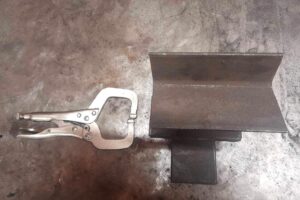
A vice clamp and jig that Jack made to help him with a number of things.

During lockdown I continued to grow my business by gaining local customers and selling garden pieces such as firepits. I also got involved with Epilepsy Scotland, donating pieces for their online Christmas craft fair. Since then I’ve continued to support them by doing a sponsored 60k walk, over six weeks and a 5k during Christmas. I’ve done this since 2020 and it’s made me feel a lot better both physically and mentally.

Fast forward to 2022, I won the Prince’s Trust Young Achiever of the Year award at the Pride of Scotland Awards held in Edinburgh. I also done two collaborations with Kev Paxton, who continues to mentor me to this day. Both collaborations got auctioned off for the Prince’s Trust at their biggest fundraising event called ‘Lunch with an Old Bag’.

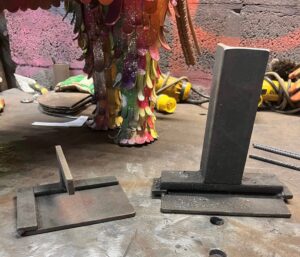
Two adaptations made by Jack for creating his work, called 'third hands'
Two adaptations made by Jack for creating his work, called ‘third hands’

In 2023 I expanded my range of pieces which led to me supplying a company in South Queensferry called Craigies Farm Shop and Deli my horseshoe candleholders for their gift shop. I continue to supply these and they have now extended their range of my pieces.

This year I’m aiming to grow my business even more by getting my work into Arnold Clark dealerships (who are one of my suppliers). I also want to continue with my charity work and continue to break down barriers by creating new pieces of art to show people that cerebral palsy isn’t a disability, it’s just a different ability.

I am still involved with the Prince’s Trust and would not be in the position that I am in if I hadn’t got involved with them.

My personal reason for supporting Cerebral Palsy Awareness Month is to make people aware that just because you have cerebral palsy this should not stand in your way of following your dreams and to never give up through tough times. I feel more needs to be done to tackle the bullying that people suffer on a daily basis for having a disability, it affects all aspects of your life.

I feel more needs to be taught about disabilities and more disabled role models should be speaking out.

This is what has led me to want to be a motivational speaker to encourage people to follow their dreams and knock down the barriers that I have faced.

You can follow Jack on Facebook via Salvaged Metal Art and through his motivational speaker page where he shares lots of content regarding cerebral palsy, epilepsy, motivational quotes and work/life balance.

My views on disabled access – Faith Wright

As part of Cerebral Palsy Awareness Month, we have teamed up with Euan’s Guide to ask our content creators their views on disabled access. 

Euan’s Guide is the disabled access review website where disabled people, their families, friends and carers can find and share the accessibility of venues around the UK and beyond. The website shares thousands of experiences and is the go-to tool for many disabled people. Euan’s Guide believe in making the world more accessible one review at a time. Thousands of people use Euan’s Guide every month to find and share disabled access information. Euan’s Guide recently published their Disabled Access Review where 6,000 people gave their views on disabled access. The review found that 91% of disabled people try to find disabled access information before visiting a new place.

My views on disabled access – Faith Wright. 

What do you do beforehand to prepare for an accessible day out with your friends and family?

We try to do as much research about the venue or place as we can beforehand. Usually look for information on the websites etc if there is any sometimes we have to phone or email. Then determine if my manual or electric chair is best. Make sure I have straws!!

What information do you look for from a venue before visiting?

If they have wheelchair access or if there is stairs etc so I know if I can get in and if so which chair is most suitable. What the accessible toilets are like.

How do you feel if you know that someone with similar access requirements has visited the venue before?

Definitely puts me at ease a little and means I’m more comfortable/likely to go if I know what to expect or if I’ve heard positive feedback

How does this help you to feel more confident or prepared to go out with your friends and family?

Because I then know what to expect and have a better understanding of what obstacles I might face and how to avoid or prepare for them.

What is the most important piece of information for you when you visit a venue for the first time with your friends or family? The most important thing is if the venue actually accessible to me.

What do you think venues could do to improve your experience as someone with Cerebral Palsy? Educate themselves on what accessibly actually means and how everyone may need something different. If a problem is reported with the accessibility then they should take the time to learn, research and do better!

What is the number one thing that you would like people and venues to be aware of about cerebral palsy to help them improve their disabled access and disability awareness? We want to be treated like everyone else we are just customers like everyone else. Having access issues can really make us feel like we don’t matter and are invisible and that really affects us when we are trying to have a nice day. So please try to be patient and kind and accommodating where possible.

You can find out more about Euan’s Guide, read some access reviews or even write your own review on their website here – Euan’s Guide – Disabled Access Reviews (euansguide.com)

Read more results of the Euan’s Guide Access Survey –https://www.euansguide.com/get-involved/access-survey/

Tags: Advice Information and Support, Cerebral Palsy, Disabled People

  • « Go to Previous Page
  • Page 1
  • Page 2
  • Page 3
  • Page 4
  • Page 5
  • Page 6
  • Interim pages omitted …
  • Page 26
  • Go to Next Page »

Search

Quick links

  • Ways to give
  • Our mission and values
  • All about cerebral palsy
  • Therapy for adults
  • Therapy for children
  • Campaigning

Copyright © 2026 · Enterprise Pro on Genesis Framework · WordPress · Log in

Cerebral Palsy Scotland logo

Cerebral Palsy Scotland
Bradbury House
10 High Craighall Road
Glasgow, G4 9UD

t: 0141 352 5000
Phone Number for Cerebral Palsy Scotland
Fax Number for Cerebral Palsy Scotland
info@cpscot.org.uk
Email for Cerebral Palsy Scotland
cerebralpalsyscotland.org.uk
Website for Cerebral Palsy Scotland

  • Facebook
  • Instagram
  • LinkedIn
OSCR logo
Nationa Lottery Community Fund logo