• Skip to primary navigation
  • Skip to main content
  • Skip to primary sidebar
  • Skip to footer

Cerebral Palsy Scotland

  • Facebook
  • Instagram
  • LinkedIn
  • Home
  • Who we are
    • Our mission and values
    • What we do and why
    • Our story
    • Our team
    • Vacancies
    • Key documents
    • Our centre
  • How we help
    • Therapy for adults
    • Therapy for children
    • Support
    • Training
    • Campaigning
    • Our impact
  • What’s on
    • Events
    • Annual conference
  • Other support
    • Support directories
    • Financial support & equipment funding
    • Advice from parents
    • Online support groups
    • Support for schools
    • Legal support
  • Get information
    • All about cerebral palsy
    • Children
    • Adults
    • Therapy & treatment
    • Oral health
  • News
    • News
    • Blog
  • Get involved
    • Friends of Cerebral Palsy Scotland
    • Raise money
    • Leaving a gift in your Will
    • Corporate partners
    • Philanthropy and major donors
    • Other ways to give
    • Other ways to get involved
    • Trusts
    • Our promise to you

Why Cerebral Palsy Scotland is supporting Payroll Giving Month

Payroll Giving Month. February 2026.

Payroll Giving Month in February each year is an opportunity to shine a light on a form of charitable giving that many people are unaware of, despite it being one of the simplest and most effective ways to support charities.

Sometimes called Give As You Earn (GAYE), payroll giving allows employees to donate directly from their salary to a charity of their choice. It’s an easy, flexible way to support causes that matter, without having to fill out online forms for every donation.

For employers, Payroll Giving can increase employee engagement and provide useful insights into the causes your people care about. You can also earn recognition through government-recognised quality marks.
Make a difference every payday

For Cerebral Palsy Scotland, regular donations through Payroll Giving provide reliable, sustainable funding that supports us to continue our work.

Despite the benefits, Payroll Giving remains underused, and many people either don’t know it exists, don’t realise they can choose their own charity, or assume it is complicated to arrange.

By supporting Payroll Giving Month, we hope to help more people understand this option and make informed choices about how they support the causes they care about through their workplace.

Everyone can help!

As an employee:

  • Find out if your employer already has the scheme set up.
  • If they do, encourage them to promote it more widely during February.
  • If they don’t, let them know that it’s something you want them to consider.

As an employer:

  • Use Payroll Giving Month as an opportunity to remind colleagues of the benefits and how it works.
  • If you don’t have a scheme set up, you could ask colleagues if this is something they would make use of through feedback surveys or polls in team meetings.

For more information and resources about Payroll Giving, visit the campaign website here: Payroll Giving Month


 

The 30th Anniversary of Cerebral Palsy Scotland

I’m writing this blog to mark 30 years of services for people with cerebral palsy in Scotland. The 1st of December 1995 was a special day for children with cerebral palsy. This was when the first ever Scottish Bobath Centre opened at Knightswood Road in Glasgow.

I was there with my parents and family to join everyone at this enormous occasion.   My dad, Allan Burns, worked tirelessly to make this day happen. I remember it was a fun day and lots of people were there, including the former First Minister of the Scottish Parliament, Donald Dewar, who officially opened the centre.

The centre was an old clinic and before the building was ready, and I was treated in Knightswood Parish Church hall for my physio sessions. I used to put on my shorts for the sessions, and I remember it was really cold there!

The former school janitor’s house was on the site and was used by families from farther away to stay in while their child was receiving therapy. Now Cerebral Palsy Scotland provides outreach services for children and adults from as far away as Barra and Oban.

There were many different fundraising events from the yearly ball to the bike race. Once when I was about 11, I did a bike ride on a special bike from Elderslie to Paisley with my sister.

Sadly, at the age of 18, like many services for kids with cerebral palsy I couldn’t go there for therapy any longer, and that was a bit of a worrying time for me.

Even though I wasn’t attending Bobath Scotland, they were still providing their services to many children and that was essential, especially for parents.

In time, I went for a few sessions in the Golden Jubilee Hospital with Bobath Scotland, who had temporary accommodation there. I think then they were starting to think about services for adults with cerebral palsy.

In 2009, BoBath Scotland finally moved to their current centre in Port Dundas, and it is a great building for the charity. In 2020, Bobath Scotland changed their name to Cerebral Palsy Scotland.

A few years after they moved to Port Dundas, they started the Helping Hands Scheme for adults with cerebral palsy.  They also run children and adult social events and it’s a great way to keep in touch with all the staff and meet friends.

Over the last few years, they have held an annual Cerebral Palsy Day Conference, this year in the Crown Plaza, Glasgow.

The charity has developed amazingly since it started in that old church hall.

Thanks to receiving my therapy over these past 30 years. I can still do some transfers by standing with support and I believe I am able to do a lot more in my life physically.

I wish Cerebral Palsy Scotland all the best in the future.

By Marion Burns

Slater and Gordon

Cerebral palsy is a lifelong condition caused by early brain injury that predominantly affects a person’s ability to control their muscles and movements.

If mistakes were made in your medical care during pregnancy or childbirth, Slater and Gordon’s specialist solicitors can help you get the compensation you deserve.

Based in Edinburgh, Derek Couper and the team are here to support and help you understand what you need to know, to achieve the best outcome for you and your loved ones.

We are proud partners with Cerebral Palsy Scotland and you can read more about our support, here.


What is cerebral palsy?

Cerebral palsy is an umbrella term defined as an early-onset lifelong neurodevelopmental condition which can cause limitations in movement and speech. Due to the unique nature of each brain injury, each person will experience a unique presentation of cerebral palsy. The symptoms of cerebral palsy are not usually immediately apparent and often become noticeable as the child develops.

Symptoms can include:

  • Combination of increased muscle tone – stiffness/spasticity in arms/legs and decreased muscle tone – weakness especially in the trunk and ability to hold head up
  • Movements that are effortful, clumsy or random and uncontrollable
  • Delayed motor development, such as inability to maintain sitting posture by eight months or not being able to walk by 18 months
  • Difficulty in using hands to do fine motor tasks
  • Walking on tiptoes
  • Difficulties with feeding, swallowing, and communication
  • Issues with vision
  • Sensory difficulties
  • Learning difficulties

The degree to which cerebral palsy impacts a child can vary significantly. While some children only experience symptoms quite mildly, others can be left significantly disabled. Although there is no cure, physiotherapy, occupational therapy and speech and language support can significantly improve the quality of life for people with cerebral palsy.


Can medical negligence cause cerebral palsy?

In some cases, problems occur before, during or after a child’s birth that cannot be prevented, despite the highest standard of medical care. However, if mistakes have been made by medical staff that have contributed to the development of cerebral palsy, you may be entitled to make a cerebral palsy negligence claim.

Some of the mistakes that can lead to problems for your child include:

  • Failure to diagnose an infection during pregnancy
  • Not monitoring the baby’s heart rate often or closely enough
  • Failure to monitor blood sugar levels
  • Delays in delivering the baby (also by Caesarean Section)
  • Misuse of drugs
  • Poor treatment of jaundice
  • Complications with the umbilical cord resulting in lack of oxygen to the baby


Am I entitled to make a cerebral palsy claim?

Learning that your child’s condition could have been avoided had medical staff provided the right level of care can be devastating. If medical mistakes have contributed to the development of your child’s cerebral palsy, you may be entitled to make a claim for cerebral palsy compensation.

Doing so can have several benefits. At its core, a cerebral palsy claim can provide you and your family the financial support you need to provide the care your child requires. It can also shed light on the mistakes that were made and help to ensure that they do not happen again.


What can I claim cerebral palsy compensation for?

As well as claiming cerebral palsy compensation for pain and suffering, we’ll also include as part of your claim the cost of any care, treatment, rehabilitation, aids and equipment and any housing adaptations or property that’s required now or will be needed in the future. Additionally, if you’ve suffered any hardship as a result of lost earnings, this can also be recovered.

Cerebral Palsy Scotland takes part in the Big Give Christmas Challenge 2025

This Christmas, your generosity can make double the difference!

From 2–9 December, we’re taking part in the Big Give Christmas Challenge. For one week only, every donation made to Cerebral Palsy Scotland will be matched £1 for £1, meaning your gift will go twice as far in helping people with cerebral palsy.

Donations can only be match funded if they are received between 2-9 December, and via the Big Give platform. We will let you know when the campaign opens for donations!

To find out more, visit our campaign page on the Big Give platform.

Together, we can make double the difference for children and adults with cerebral palsy across Scotland.

Cerebral Palsy Scotland Conference – Keynote Speaker, Charlie Fairhurst’s Speech was Extremely Valuable

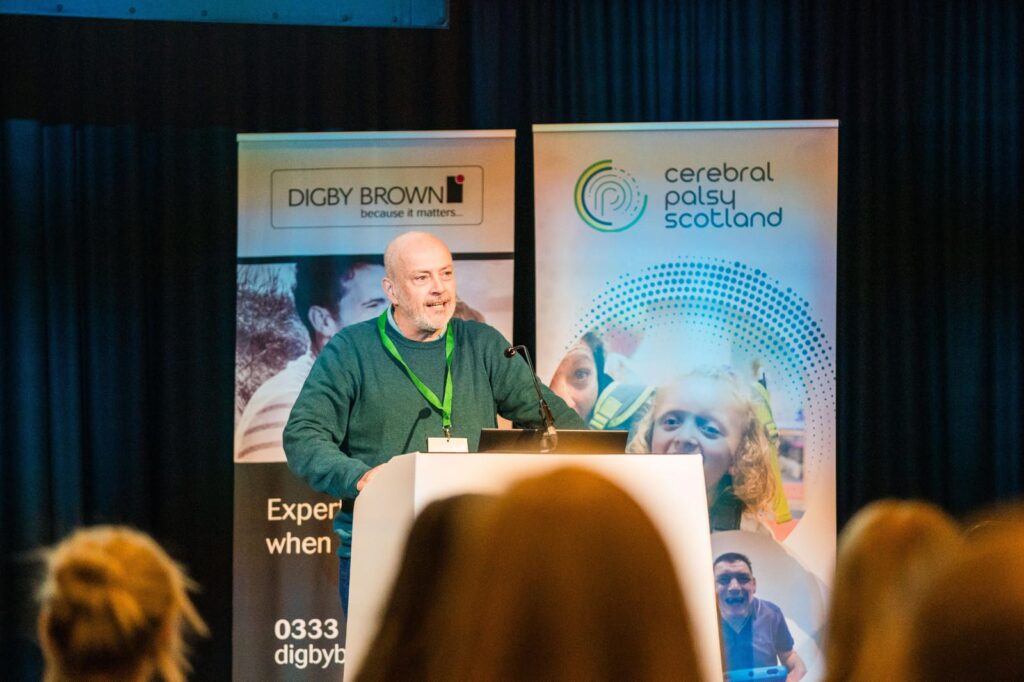
On Wednesday 8 October our Cerebral Palsy Conference took place, our keynote speaker, Charlie Fairhurst discussed Family-Centred Care in Childhood Neurology: Challenges, Collaboration, and Change to a full suite. which delivered a strong message on the importance of placing children and families at the heart of care. Many of our attendees at the end of the day said how his speech was “extremely valuable”.

Dr Fairhurst explored how conditions like cerebral palsy require individualised, dynamic, and lifelong support, tailored to each child’s changing needs. Key topics included the complexity of spasticity, the impact of co-existing conditions such as epilepsy, feeding and respiratory challenges, and the need to focus on comfort, function, and quality of life.

The talk also emphasised the role of multidisciplinary teamwork, improved communication, and aligning care with both clinical guidelines and family priorities. Attendees were encouraged to “put the fun into function” by supporting meaningful, enjoyable participation for every child.

Why this matters

This keynote speech resonated deeply with the attendees, which a made up of service users, families, therapist, clinicians and educators because it reinforced the importance of seeing each child as an individual, beyond their diagnosis.

By highlighting the value of family involvement, personalised care, and multidisciplinary collaboration, the session offered practical insight and renewed purpose for those working to improve outcomes and quality of life for children with cerebral palsy and other neurological conditions.

How you can help

💚 Want to help us do more?
➤ Donate today
➤ Sign up for updates
➤ Share this story on social media and tag us #cpscot 


  • « Go to Previous Page
  • Page 1
  • Page 2
  • Page 3
  • Page 4
  • Interim pages omitted …
  • Page 60
  • Go to Next Page »

Search

Quick links

  • Ways to give
  • Our mission and values
  • All about cerebral palsy
  • Therapy for adults
  • Therapy for children
  • Campaigning

Copyright © 2026 · Enterprise Pro on Genesis Framework · WordPress · Log in

Cerebral Palsy Scotland logo

Cerebral Palsy Scotland
Bradbury House
10 High Craighall Road
Glasgow, G4 9UD

t: 0141 352 5000
Phone Number for Cerebral Palsy Scotland
Fax Number for Cerebral Palsy Scotland
info@cpscot.org.uk
Email for Cerebral Palsy Scotland
cerebralpalsyscotland.org.uk
Website for Cerebral Palsy Scotland

  • Facebook
  • Instagram
  • LinkedIn
OSCR logo
Nationa Lottery Community Fund logo