• Skip to primary navigation
  • Skip to main content
  • Skip to primary sidebar
  • Skip to footer

Cerebral Palsy Scotland

  • Facebook
  • Instagram
  • LinkedIn
  • Home
  • Who we are
    • Our mission and values
    • What we do and why
    • Our story
    • Our team
    • Vacancies
    • Key documents
    • Our centre
  • How we help
    • Therapy for adults
    • Therapy for children
    • Support
    • Training
    • Campaigning
    • Our impact
  • What’s on
    • Events
    • Annual conference
  • Other support
    • Support directories
    • Financial support & equipment funding
    • Advice from parents
    • Online support groups
    • Support for schools
    • Legal support
  • Get information
    • All about cerebral palsy
    • Children
    • Adults
    • Therapy & treatment
    • Oral health
  • News
    • News
    • Blog
  • Get involved
    • Friends of Cerebral Palsy Scotland
    • Raise money
    • Leaving a gift in your Will
    • Corporate partners
    • Philanthropy and major donors
    • Other ways to give
    • Other ways to get involved
    • Trusts
    • Our promise to you

You Give We Give: the sustainable investment scheme that benefits you and Bobath Scotland

You Give We Give: the sustainable investment scheme that benefits you and Bobath Scotland

Bobath Scotland has partnered with Greenfinch, an innovative online investment platform which allows you to invest money and donate to charity via its You Give We Give (YGWG) scheme at the same time. Here’s how an investment with Greenfinch can help us provide much-needed services to support people living with cerebral palsy – and benefit you in turn. 

Greenfinch’s You Give We Give scheme allows your investment to earn dividends, while also generating a donation for Bobath Scotland. The video below explains how:

Be a philanthropist and an investor

Most investors consider a company’s social and environmental impact before investing with it. In fact, 62% of UK investors (anyone with money in ISAs, pensions and wealth management schemes) want to invest in ethical businesses. 

TAM Asset Management, an FCA regulated investment management company based in London, realised that wealth management could be used as an innovative way to raise funds for charities. Lots of charity donors have money in ISAs or general investment accounts. Linking profits that donors make from wealth management to charities they’re affiliated with makes sense – it satisfies the desire for social impact.

The launch of the YGWG donation scheme allows you to invest and donate at the same time; with up to 20%of your annual investment profits being donated to the charity of your choice via TAM’s non-advised investment platform Greenfinch.

A non-advised platform means that TAM doesn’t provide actual advice. As the company behind Greenfinch, they manage your investment portfolio – but won’t tell you what one to choose. The process is  straightforward and puts you in charge: you go to the website, review the various portfolios (which are made up of various assets like stocks, shares, bonds and cash – check them out here), assess the returns over the last five years and make your choice.

Our partnership with Greenfinch means that Bobath Scotland members can now choose from a range of ethical and mainstream wealth management products – while donating to us at the same time. What’s more, your donation is matched by TAM with an equal percentage from their annual management fee.


Feel-good money

Here’s a fictitious example to demonstrate how an investment with Greenfinch can benefit both you and Bobath Scotland:

Mrs Johnson’s portfolio was valued at £200,000 on 1 January. The portfolio did well, and its value increased by five percent to £210,000 by 31 December. As a current member of Bobath Scotland, Mrs Johnson chose to donate ten percent of her net gain to the charity. This means that £1,000 goes to Bobath Scotland, plus the matched ten percent from TAM’s annual fee.*

Mrs Johnson is in charge of how much she gives and who she gives to. She can increase or decrease her donation and change her choice of charity at any time. Each year, TAM sends Mrs Johnson an update outlining and confirming her investment, donation and calculation. If she agrees to provide some personal details like her address, we can claim Gift Aid and top up her donation even more.


Sustainable wealth management

In this new age of ethical investing, your long-term personal finance objectives can succeed in line with your social and environmental considerations. Simply put, this innovative approach to wealth management can provide you with a sustainable source of income while supporting Bobath Scotland, allowing us to continue offering our valuable services, helping those with cerebral palsy live well.

If you’d like to hear more about how Greenfinch can benefit you and Bobath Scotland, please get in touch with Greenfinch, or find out more on their FAQs page. 

*Past performance is not a guide to future returns and investors may get back less than their original investment.
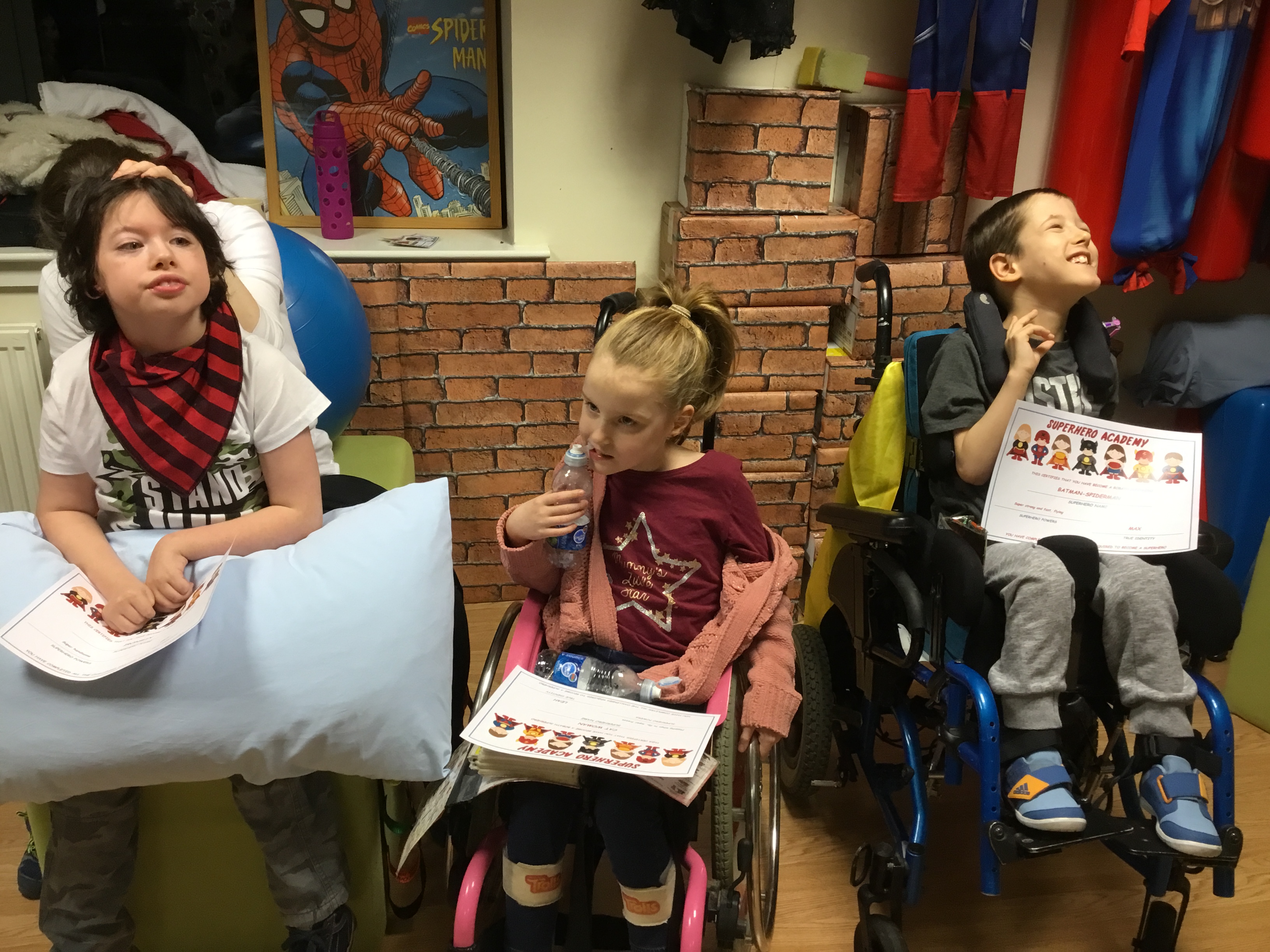
AAC Children’s Group are super-communicators

AAC Children’s Group are super-communicators

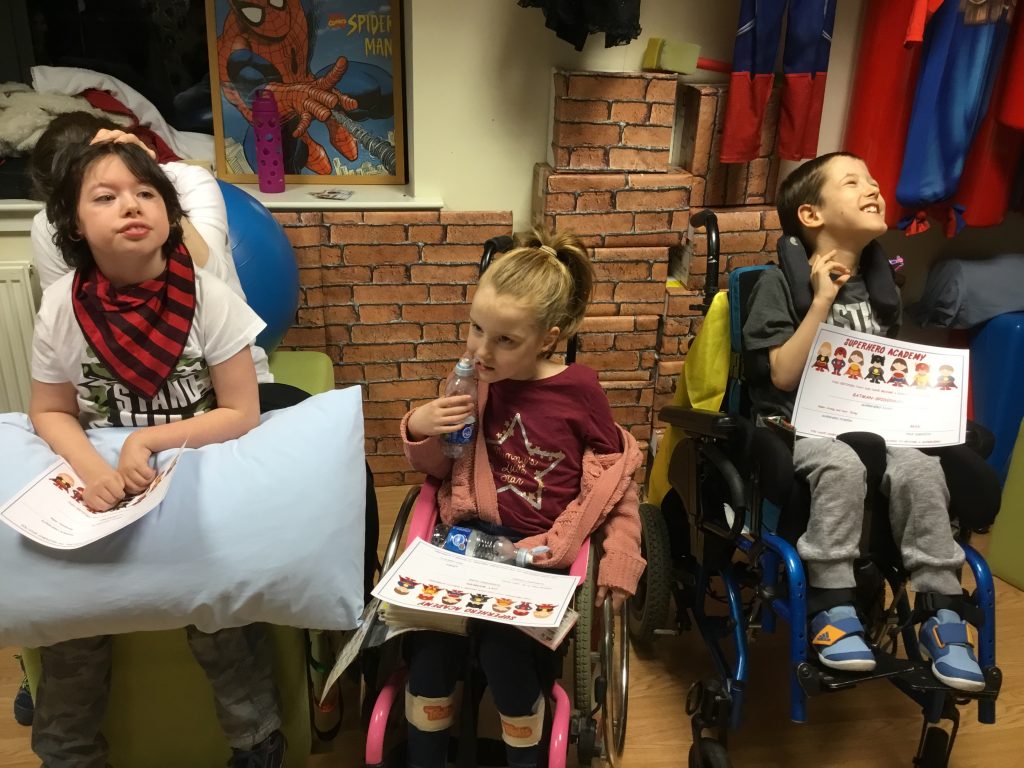
In February, Bobath Scotland hosted our annual three-day holiday group for young users of Augmentative and Alternative Communication (AAC), supported by the Corra Foundation, Scotmid Community Fund and Tesco Bags of Help.

Buddies 2018

One in four people with cerebral palsy are unable to use their voice to speak, and use communication books or devices such as tablets or ‘eye gaze’ computers as their main form of communication.  

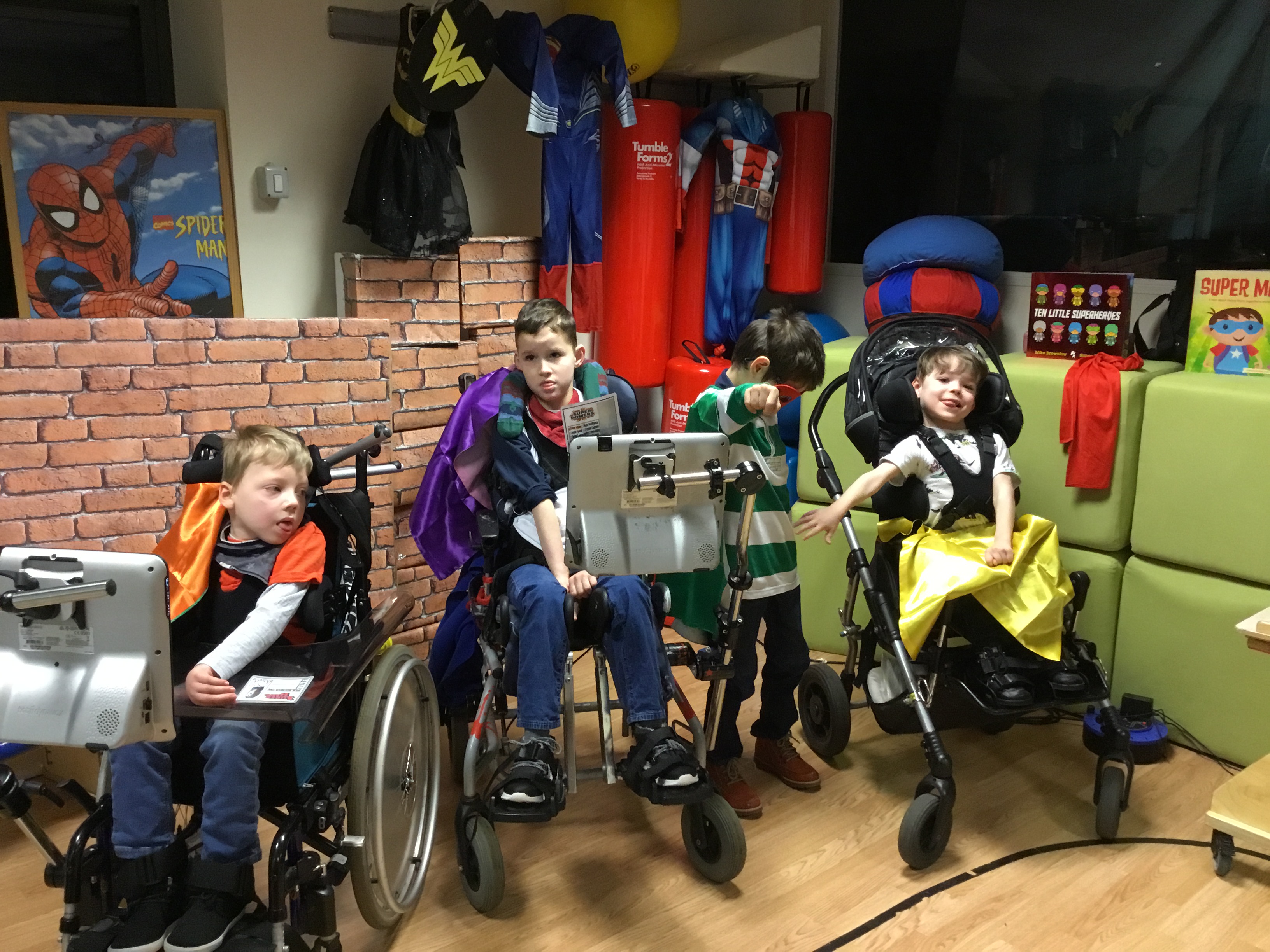
The seven children who came to the superhero-themed group had a blast with the therapy team, developing their communication skills and forging friendships with each other. 

The kids used their devices to choose a superhero identity, pick their super powers, and interact with each other during fun games. At the end of the group, the children got the chance to meet with a group of adult AAC users, who had a hoot dressing up in superhero costumes and telling the kids about their various superpowers!   

Buddies 2018

The AAC group was partly funded through support from the Corra Foundation after Bobath Scotland won a popular vote in their #LetsChangeThat video competition in December. Support was also contributed through Scotmid’s West Regional Committee Community Grant scheme, and Tesco Bags of Help. 

Commenting on the support received for the group, Virginia Anderson, Head of Fundraising at Bobath Scotland said, 

“Bobath Scotland needs to raise £8.50 of every £10 we spend to deliver our services and support to children and adults with cerebral palsy. 

“We are so grateful to the Corra Foundation, Scotmid and Tesco Bags of Help. Their combined support has enabled us to provide an important opportunity for young AAC users to meet each other, learn from adult AAC users, and develop their communication skills, whilst also having fun!”

Buddies 2018

World Toilet Day

World Toilet Day  

World Toilet Day (WTD) is an official day organised by the United Nations on 19 November to inspire action to tackle the global sanitation crisis. Worldwide, 4.5 billion people live without “safely managed sanitation”. World Toilet Day was established by the World Toilet Organization in 2001.

By Jill Clark, Bobath Scotland Communications Assistant.

Everyone don’t realize how going to the toilet is a part of everyone’s everyday life and take it for granted. Everyone should have access to a toilet everywhere – at work, home, or just out and about. 

But for a lot of disabled people like myself getting access to the toilet can be a big challenge, because we require a hoist to get on and off the toilet. Everywhere should have a standard disabled toilet, but a standard disabled toilet isn’t any good to a lot of disabled people. 

So, there is a type of toilet called “Changing Places”, which has a hoist, adult-size changing bed and is big enough for a person and two support workers. 

But there is a lack of these toilets, and because of that there is a lot of  people and organisations who campaign and raise awareness of Changing Places toilets. 

One of these organisations is PAMIS. PAMIS (Promoting a more inclusive society) is a Scottish charity which supports people with profound and multiple learning disabilities, PMLD – their families, carers and professionals. PAMIS is the co-founder of the Changing Places Campaign and the lead charity for this campaign in Scotland. PAMIS are also members of the Changing Places Consortium.

The Consortium campaigns throughout the UK and beyond for Changing Places toilets to be provided in all public places, including city centres, shopping centres, railway stations, airports and leisure complexes.

As I have a disability, I do a lot of campaigning myself for Changing Places toilets and raising awareness of the need of these important toilet facilities. I am well known as The Toilet Woman, and I have my own FaceBook page. I go out and about in Glasgow to see if anywhere can get a Changing Places toilet, and I email places too. I was featured on the STV website recently, raising awareness of the lack and the need of Changing Places toilets

Glasgow now has quite a few Changing Places toilets, including the Hydro, Central Station, Glasgow Airport, Braehead shopping centre and more to come.

So on this World Toilet Day I hope to get a message across that going to the toilet is a big part of people’s everyday lives, and having access to a toilet is really important, especially to disabled people.

Make your voice heard and improve CP services and support

Make your voice heard and improve CP services and support

Bobath Scotland is urging the cerebral palsy community to participate in the consultation on the first ever National Action Plan on Neurological Conditions.

BobathGroupLaunch

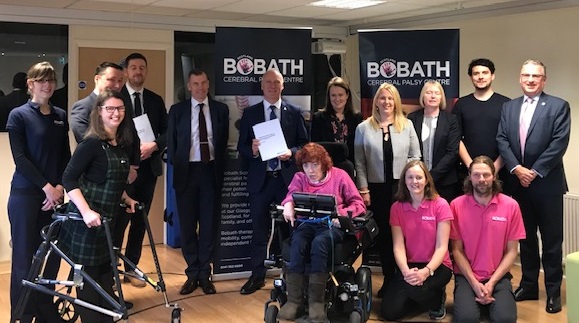
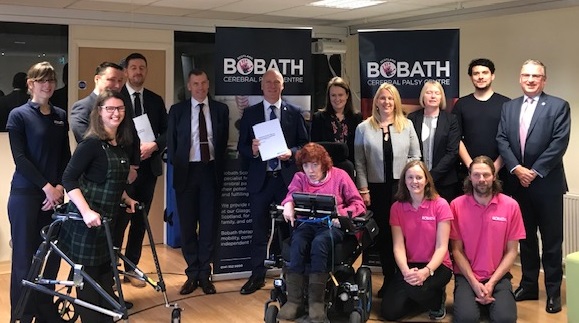
Today at Bobath Scotland we welcomed Joe Fitzpatrick MSP, the Minister for Public Health Sport and Wellbeing, who visited the centre to launch the public consultation on the draft National Action Plan for Neurological Conditions and find out more about our work.

The draft National Action Plan aims to improve treatment and care for adults with neurological conditions – including CP – across Scotland.

Bobath Scotland hope that this National Action Plan will help to address two key issues:

  • the lack of specialist services and support for adults with cerebral palsy, and
  • the improvement of national data on the cerebral palsy population in Scotland.

Commenting on the launch of the draft Plan, Stephanie Fraser, Chief Executive at Bobath Scotland, said: 

“For too long people with cerebral palsy have been ignored and this is their opportunity to make their views known. 

“Cerebral palsy is seen as a childhood condition and adults are simply left to get on with things. As people with cerebral palsy age the effect of the condition on their lives is marked but there is simply not wide enough recognition of this, and there are few specialist services and health professionals to support them. 

“Collection of data at the national level on the cerebral palsy community is vital to the development of this specialist support. When it comes to providing health services, it’s a case of, ‘If you’re not counted, you don’t count.’  

“We therefore urge the cerebral palsy community across Scotland to get involved with this consultation. We very much appreciate the Scottish Government’s desire to consult with the wider neurological community and welcome the co-operative way in which they have produced the draft plan.”   

How you can get involved

Respond individually: Anyone living with neurological conditions, their families and those that support them can respond to the consultation. To see the draft Plan, and find out how to respond, visit the Scottish Government website.

Comment through Bobath Scotland: Bobath Scotland will be sending in an organisational response, so if you have an opinion or comment on the standard of care and support for adults with CP, or anything contained in the draft Action Plan, please get in touch and we will feed this into Bobath Scotland’s reponse. Please contact anna.hunter@bobath.scot

Why we work: being disabled and employed

Why we work: being disabled and employed

Some people may think that disability and employment don’t go in the same sentence. But in this blog I have interviewed a number of disabled workers who I hope will change people’s views. 

Research from the Scottish Government says that: “Disabled people are 20% of the population but make up only 11% of the private sector workforce and 11.7% of the public sector workforce.” Which is quite poor in 2018 especially when everyone tries to be included, especially disabled people. But there are a lot of disabled people out there who work and love working.

Jill Clark

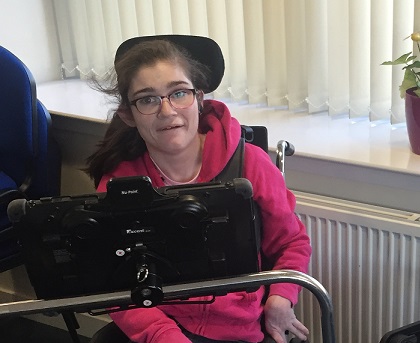
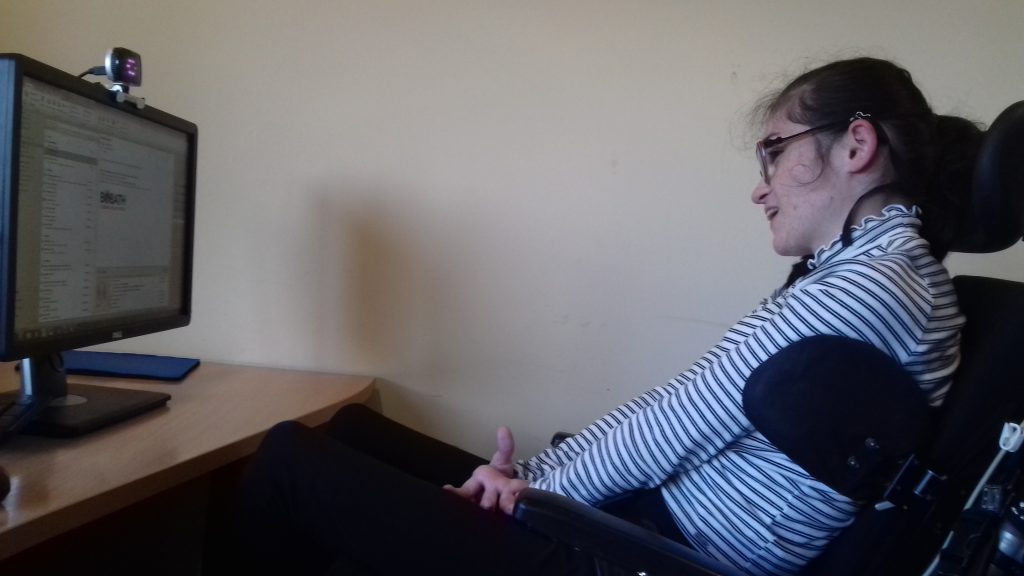
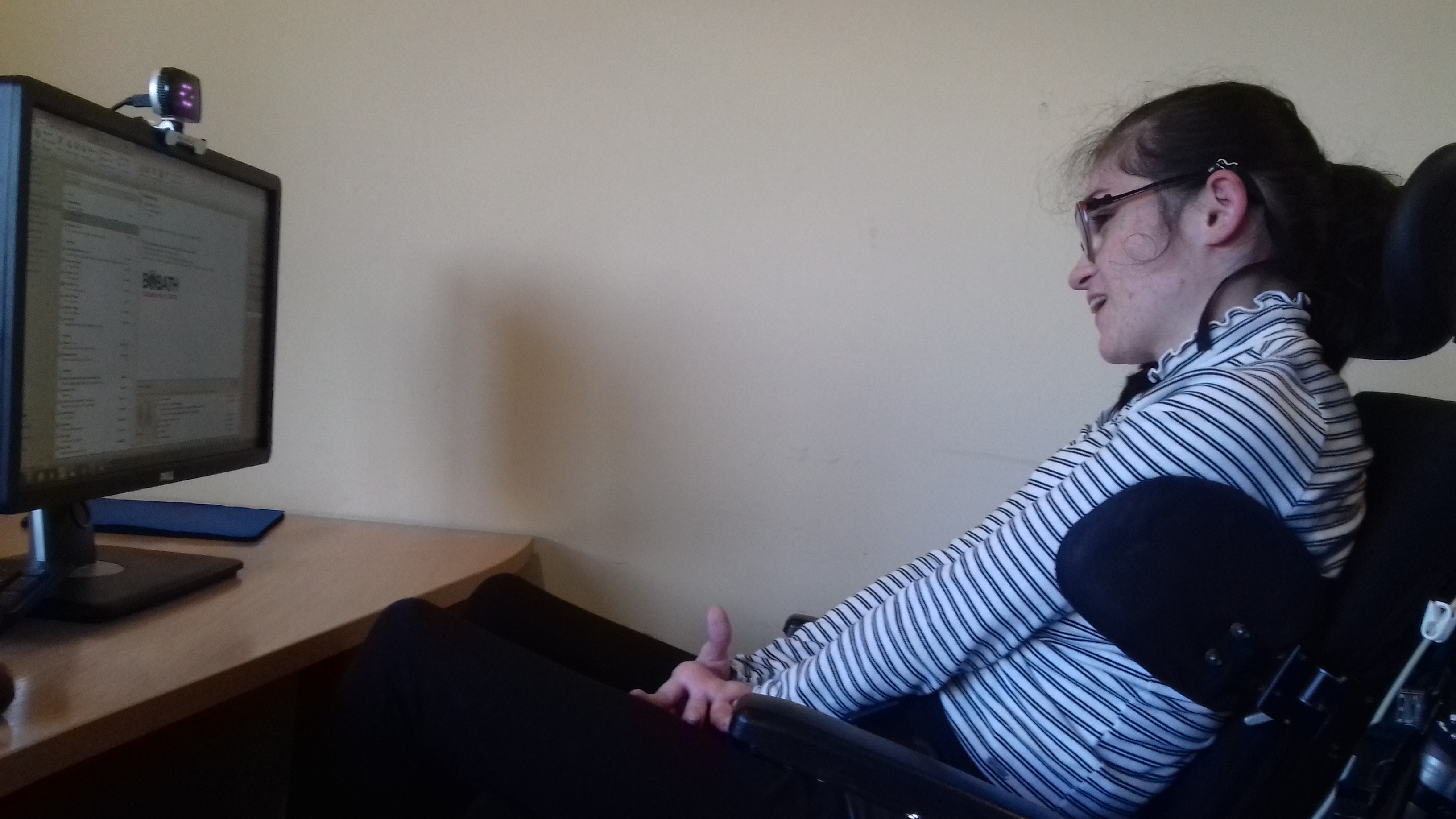
I am 26 and have cerebral palsy. I am in a wheelchair and communicate through a communication device. I don’t let my CP get in my way, so I work which I love. I am a Communications Assistant at Bobath Scotland where I started out as volunteer and then I got an internship for 3 months through Inclusion Scotland. But luckily enough Bobath got funding from Community Jobs Scotland to keep me on as an employee, which is fantastic. As I said before, I don’t let my cerebral palsy stop me, but I need to have two carers to support me to get to and from work and who also support me during the day at work, which is funded by social work. Last year, social work tried to change my carers around and they asked me what do I get out of working, making it out, if I am disabled then I shouldn’t be working, but lucky enough me and my fantastic Mum and Dad got it through to them how important my job is and they kept my carers as they were. Why do I want to work? Well, why not? Just because I have a disability doesn’t mean to say that I can’t or shouldn’t be working. I love it that I get up in the morning and know that I am going to work and putting my ability to use.

As a disabled person I am really interested to hear from other disabled people about their own experiences of employment, so I have been in contact with a few people who are happy for me to include their experiences in this blog.

Marion Burns

Marion Burns

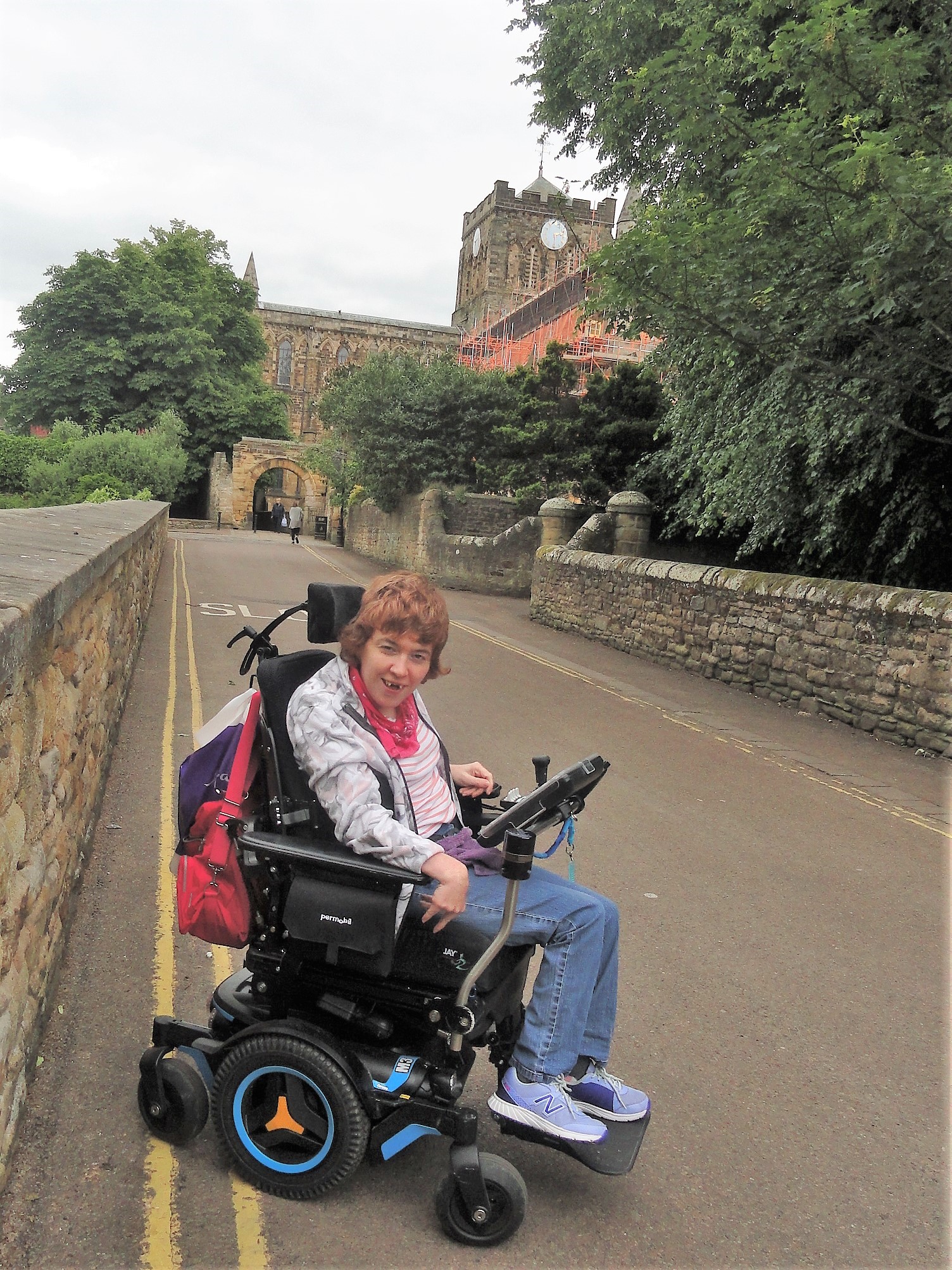
Marion Burns is 34 and lives in Renfrewshire, She has cerebral palsy and currently volunteers with Bobath Scotland. Previously, Marion has been employed as an Advocacy Worker, a job which she said she “loved”. For Marion, work is an important part of her life. She told me, “I love being a working woman, despite my disability, so that I can be part of society – that means a huge deal to me!”

When Marion was an Advocacy Worker, she enjoyed supporting other people. She said, “When I worked as an Advocacy Worker, I used to be a voice for people who were disabled or had other health problems, helping them from house issues to care issues. Once, I got a lot of money back for someone.”

But, she also found it difficult to get a job in the first place and felt that she didn’t get the help she needed. “It was quite hard to find something, especially when I found no support from the Job Centre. I was lucky enough in that I knew about Advocacy, and thought that I will give it a try”

Andrew Tomlinson

Andrew Tomlinson

Andrew Tomlinson is 35 living in Glasgow. He has cerebral palsy and works at Penilee Credit Union as a Financial Admin Assistant.

Andrew was unemployed for two years but he wasn’t about to give up looking for work. He started as a volunteer in Glasgow South West Regeneration Agency in the accounts department before he got his paid job.

But Andrew thinks that it was more difficult to find employment because of his disability, and he thinks there’s steps that can be made to make it easier. He thinks the Government has taken backwards steps with access to work and that better public transport infrastructure would help everyone.  And he added, “We need to work as a community of equals – both able bodied and those impairments working together to create pathways in the future”.

Andrew points out that, “Everyone wants to work I think. It’s about community working together for a common goal. It’s important socially and it’s important for creating relationships. I think employment is great in creating a sense of achievement, of adding value to society and the economy building for tomorrow. It’s also better than watching Jeremy Kyle”.

Elaine Boyd

Elaine Boyd

Elaine Boyd is 48 and lives in Glasgow.  Elaine works as an Associate Director of Audit Quality at Audit Scotland.

Elaine was lucky enough that she got her job without any problems but she notes that she is very aware that this isn’t the case for everyone who is disabled.

Elaine adds that, “It is important for me to work and have self-worth and contribute to my family’s income to enable us to enjoy life. I also like to think I can be a good role model for disabled people in demonstrating my ability to work”.


Michael McEwan

Michael McEwan is 34 and lives in Glasgow.  Michael has cerebral palsy and leads a busy working life, including being a freelance journalist and working as the Chair of East Renfrewshire Disability Action.

Michael notes that it was quite difficult for him to get a job because of his disability but added that, “but I feel that my Disability should not stop me in any way and it should not be any more difficult.”

Michael likes working because it gives him a chance to make new pals and to get more confident at his job.

From all of the feedback of these four people’s experiences, and my own experiences of employment, it shows that disabled people do want to work, but there might be a few issues for some disabled people such as myself and Marion who want to work but have had to fight for support workers to be able to do so. Or Andrew and Michael who found it difficult to find a job because of their disabilities. So overall, yes there are some issues but we all work around it because we do want to work and we don’t want to let our disabilities get the best of ourselves.

Coming back to my own experience about my social worker asking me what do I get out of working, I really hated that because I could have been like, “Oh well, I have a disability and I don’t need to work, so I am not going to get a job because I am disabled”. But from a young age I always wanted to work and I have worked so hard to get to where I am today, so for someone to question me because I am working was really hurtful for myself and my Mum. Without being cheeky, and I’m sorry if I hurt anyone by saying this, but there are a lot of people out there who have nothing wrong with them and don’t want to work, but there are people like myself who are disabled and do want to work.

I am very proud of myself for getting a job and I can honestly say I do love my job. There are some days when I don’t want to get up and go to work like everyone does, but overall I am very proud to have a disability and to be able to work. I hope this blog has shown that disability and employment can and do go together.

  • « Go to Previous Page
  • Page 1
  • Interim pages omitted …
  • Page 48
  • Page 49
  • Page 50
  • Page 51
  • Page 52
  • Interim pages omitted …
  • Page 60
  • Go to Next Page »

Search

Quick links

  • Ways to give
  • Our mission and values
  • All about cerebral palsy
  • Therapy for adults
  • Therapy for children
  • Campaigning

Copyright © 2026 · Enterprise Pro on Genesis Framework · WordPress · Log in

Cerebral Palsy Scotland logo

Cerebral Palsy Scotland
Bradbury House
10 High Craighall Road
Glasgow, G4 9UD

t: 0141 352 5000
Phone Number for Cerebral Palsy Scotland
Fax Number for Cerebral Palsy Scotland
info@cpscot.org.uk
Email for Cerebral Palsy Scotland
cerebralpalsyscotland.org.uk
Website for Cerebral Palsy Scotland

  • Facebook
  • Instagram
  • LinkedIn
OSCR logo
Nationa Lottery Community Fund logo