• Skip to primary navigation
  • Skip to main content
  • Skip to primary sidebar
  • Skip to footer

Cerebral Palsy Scotland

  • Facebook
  • Instagram
  • LinkedIn
  • Home
  • Who we are
    • Our mission and values
    • What we do and why
    • Our story
    • Our team
    • Vacancies
    • Key documents
    • Our centre
  • How we help
    • Therapy for adults
    • Therapy for children
    • Support
    • Training
    • Campaigning
    • Our impact
  • What’s on
    • Events
    • Annual conference
  • Other support
    • Support directories
    • Financial support & equipment funding
    • Advice from parents
    • Online support groups
    • Support for schools
    • Legal support
  • Get information
    • All about cerebral palsy
    • Children
    • Adults
    • Therapy & treatment
    • Oral health
  • News
    • News
    • Blog
  • Get involved
    • Friends of Cerebral Palsy Scotland
    • Raise money
    • Leaving a gift in your Will
    • Corporate partners
    • Philanthropy and major donors
    • Other ways to give
    • Other ways to get involved
    • Trusts
    • Our promise to you

Edward Stanton leaves a lasting impact

Leaving a gift in your will can have a life-changing impact for people with cerebral palsy in Scotland and their families.

We are grateful to Edward Stanton, who decided to leave a legacy to Cerebral Palsy Scotland in his will. Below, Edward’s friend Peter writes about Edward and what motivated him to donate in support of people with cerebral palsy.

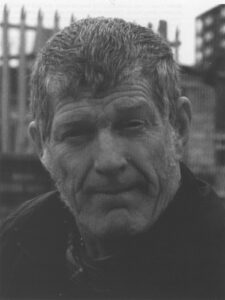
A black and white portrait of Edward Stanton.I’d like to tell you about Edward Stanton, a man I am proud to have called my friend. Born in 1939 he was diagnosed soon after with cerebral palsy. In keeping with the times he was considered uneducable so did not attend mainstream school.
Worse still, at the age of seven he was removed from his family in Glasgow to Caldwell House near Lugton in Renfrewshire and later to Lennox Castle Hospital, Lennoxtown. Deliberately placed out of sight it took a lot of effort using public transport for his family to visit. That determination was shared by Edward and reflected in his irrepressible spirit and the opportunities that he took to enhance his prospects and those of others.

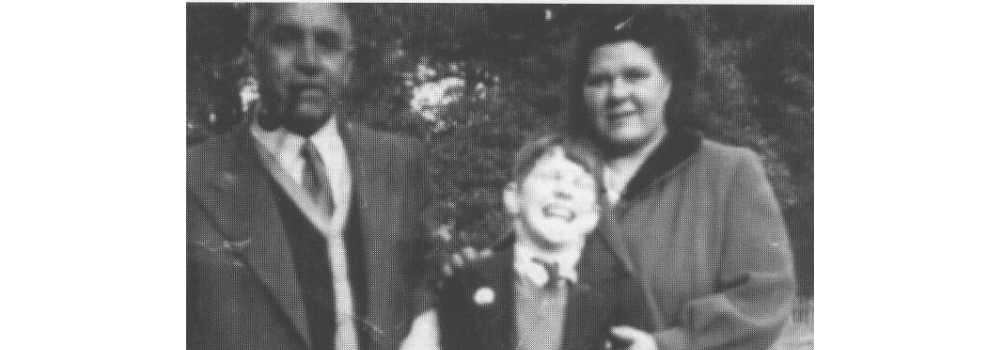
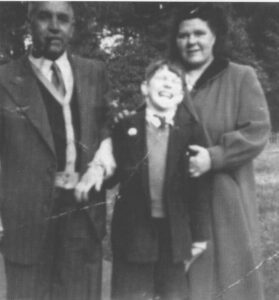
A black and white photo of a young Edward. He is standing, smiling with his mum and dad.Edward stayed in Lennox Castle until he moved back to live with his family in 1967. A life-long Celtic fan, let’s just say that was a very good year. Gradually he built up his own way of living and took on the family tenancy.
To say Edward embraced life with both hands would be an understatement. His sense of fun meant he was always up for an escapade, the hairier the better. At the same time he was a powerful advocate for others and as opportunities arose for him to access support to live in the way he wanted so he encouraged and educated others on how do so too. Through rights based campaign work, direct action and group advocacy he enthused and emboldened others. He took part in training events with nursing and social work staff and students not to mention regular letters to Scottish Ministers and local councillors. His persistence and determination to find a way was clear.

Edward used his story to encourage others. He had several versions of his biography and he didn’t let his lack of formal education get in the way. He typed out a version of his story on computer using one finger, words, dictated to him letter by letter by letter. During a difficult time at work I asked him how he managed to get through all those years in institutional care. His reply “I just had to believe that one day it would
be better” embodies all those qualities.

Edward died in July 2021 having taken ill when watching his beloved Celtic. He asked in his will that a donation be made to Cerebral Palsy Scotland. I am pleased to be able to carry out his wishes in a tribute to his sense of generosity and justice.

Find out more about leaving a gift in your Will to Cerebral Palsy Scotland or making a donation in memory of a loved one.

My experience with accessible train travel

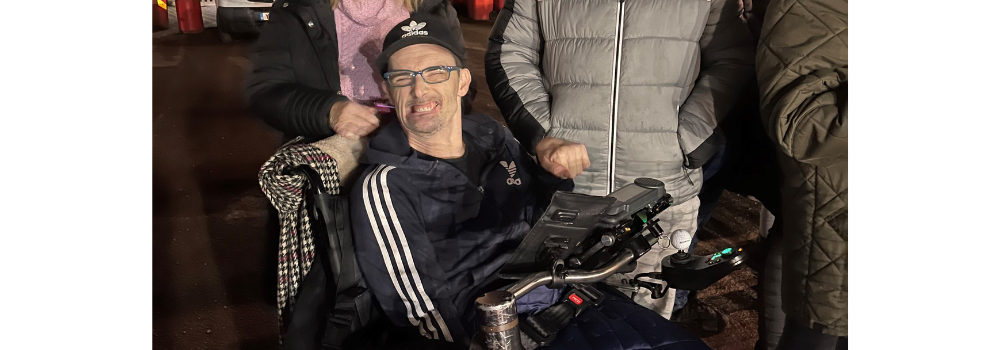
Barry smiling at the camera. He is sitting in his wheelchair. His communication aid is in front of him.

In this blog, Barry writes about his recent train trips, and his experiences of the new system for accessing ramps when you’re travelling by train.

My name is Barry Smith and I have cerebral palsy, which means I am physically disabled and I am in a power wheelchair.

Some disabled people might think they can go on a train no more because they heard the personnel who work at their train station can’t get the train ramps out anymore.

Now, the person who takes the tickets on the train gets the ramp out. I think this works better because the personnel who work on the train know which stop the disabled person wants on and off at. This means the personnel who work in the train office can get on with their job.

In the last six weeks, I have been on a train three times, here where I am being and then finding out. First, I went from Irvine to Glasgow with the ramps and it all went well, then I went back to Irvine on the train which were a great day. I book the trains ramp to do this two days before, which is great times, then I went to Ayr on the train then back to, which was a nice day out as well.

Four weeks later I went from Irvine to Glasgow then a wheel around to Queen Street to get a train onto Edinburgh W to get the Newscastle train – all the ramps were booked to let me get on and off each train with my power wheelchair at the right stop, everyone were there at the right time for each train to get me on and off in time.

My plan went so well and I met the man off the train who took me to where I going for a respite holiday for a week. After I was on my holiday I went back for the train – everything was booked like before to get me back home again.

More information on accessible travel with Scotrail can be found on their website. 

Straight Talking group – my journey with Dundee University

Image of Alan McGregor, smiling and sitting on a sofa.

The University of Dundee has a long history of research into Augmentative and Alternative Communication (AAC) – ways to support communication for those who have difficulties using speech.

AAC user Alan McGregor writes about he got involved with Dundee University and their Straight Talking expert user group.

I first got involved with Dundee University in around 1986 when my speech therapist asked Dr Norman Alm from the computing department at the university if he would like to help me in school with my new speech device which was a Vois135. Dr Alm helped me with storing different words and phrases and where they were saved in the vois135 for me to find and use.

We grew to be good friends over this time and in 1989 I asked if I could help out with him working on Augmentative and Alternative Communication (AAC) at the University. The first project we worked on was software called Floorgrabber which we started from scratch which was used on an early Apple Desktop and a laptop computer. We took this software to the United States, Australia and Japan in the early 90s to demonstrate how it worked with me giving talks to Speech and Language Therapists and AAC users. I mostly talked about my swimming career and the work we were doing at the university.

In 1990 with the university team we travelled to Stockholm, Sweden. At this time I think there were only two or three AAC users working with Dr Alm at the university and we attended the International Society for Augmentative and Alternative Communication (ISAAC) conference. This was an eye opening experience for me, seeing all of these AAC users in one place, all using different hardware and software to enable them to speak. Not to mention all of the AAC specialists, Speech and Language therapists, software and hardware engineers and doctors, all in one place, all with same aim… to help people to talk.

Over the years I continued to help out with the University, giving talks, testing software, developing ideas and attending conferences. In 2010, Professor Annalu Waller started the Straight Talking Group. This helped us to attract some more AAC users to work with the University which gave us a larger range of experiences and ideas to work with.

Around that time, Professor Waller started the Straight Talking Group working on a new project. Annalu asked the group if we would be interested in doing sessions with student doctors which would involve giving a short presentation and meeting with them in small groups to encourage them to ask us questions and have conversations with us about our experiences in hospitals and local practices. The purpose of these sessions was to help the students understand what difficulties they might face when they treat or diagnose a non verbal communicator. Members of the group were able to retell stories about communication aids being locked away for safe keeping, not getting meals and not being spoken to directly, the doctors would speak to the parents and carers. These sessions give the students a bit of experience at communication for when they later may have to help someone else who does not talk. I feel that these sessions can be very helpful for the students and we all hope that it is of some benefit to others like us. We still do these sessions every year with 2nd year and 4th year medical students.

The group continues to work on software development ideas, some of our suggestions are offered to computing students to work on as projects for their courses. We have in the past been approached by software companies to do user testing and feedback. The software testing and idea development is my personal favourite part of it all, I love to see an idea we have come up with turned into a reality.

There is a lot of talk around Artificial intelligence and how AI can help with AAC, I had proposed a software idea in the past which would use AI/speech recognition to “hear” the conversation and offer real time suggestions to enable an AAC user to join in with the conversation much quicker. This is an area which I hope can be developed by some very clever people to help us communicate much faster than we can right now.

At the moment the group is working towards a mentoring qualification which ties in to the sessions we are doing with the student doctors as we have a mentoring role with them. In the future I hope we can also use the mentoring qualification to help other non verbal communicators to build confidence and realise their potential.

More information about how to get involved with the Straight Talking Group can be found https://aac.dundee.ac.uk/stg/

What does independence mean to me? – Melissa Cassidy

As part of cerebral palsy awareness month, Melissa Cassidy has written a blog about independence and what it means to her. 

What does independence mean to me?

As you grow up with a disability there’s always increasing questions that arise in yourself and from others about how independent you are going to be in life. There’s always the assumption that you as a disabled person don’t have the same desire as others to be independent which can often be quite harmful and discouraging. I think this belief comes from the idea that most disabled people lack ambition – for most people this couldn’t be further from the truth.

Independence is a very personal concept and no two people will have the same definition of independence. For example, when I was seven years old I thought independence was being able to get dressed myself, when I was twelve I thought being able to take showers and baths myself was independence and now I see it as being in control of my week and doing things like studying and writing. I’ve learned through this that independence is subjective. Personally I’m very ambitious so often I can inflate my definition of independence which can become overwhelming; I think this is because I’m lucky in the abilities that I do have and as a result of this I push myself. Overall though, you can’t define independence or say who is or isn’t independent.

If we want to use the arbitrary scale of independence though – I’d say I am fairly independent. I’ve had my house adapted to allow me to do essentially all my personal care myself which I’m really thankful for. I go out with friends myself and I can use public transport safely. Keep in mind that I’m 17 now so all this has been gradually worked towards and nothing has come easy. I am still working on learning kitchen skills though and currently this is what I think would limit me from moving out (a huge personal goal). I also can’t do my own hair which is why I’ve kept it short for most of my teenage life although I have started growing it out in determination to find a solution. Sometimes I find it difficult to accept that I need help because I am so desperate to be prepared for adult life.

There’s also very much a social pressure to be independent when you’re disabled. It’s almost like people see those who manage the stereotypical definition of “independence” and are disabled as better than those who don’t which is pretty absurd. I often get asked a lot nowadays questions like “how will you get a job?” Or “how will you live alone?” And while these aren’t asked with bad intentions I think it’s quite rude firstly to assume that everyone must follow these paths and secondly to assume that disabled people can’t achieve these things. Judging people based on they’re “independence” is also really hypocritical in the sense that if a disabled person can’t dress themselves they’re seen as not “independent” but if an able-bodied person breaks their arm and can’t dress themselves we don’t suddenly think if them differently or imagine their lives differently.

Ultimately independence as a disabled person is about achieving the goals you set for yourself as opposed to living up to a societal standard of what you should be doing. It doesn’t change who you are because in my opinion a person is what they can do, not what they can’t.

Tags: Cerebral Palsy, Young people support

My cerebral palsy is a part of me – Barry Smith

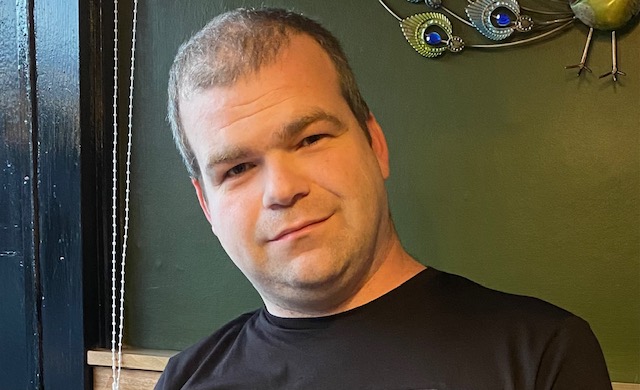
Image of Barry smiling at the camera

As part of cerebral palsy awareness month, Barry has written a poem titled “My Cerebral Palsy is a part of me”. 

My Cerebral Palsy is a part of me.

Many people who don’t know me might see me in my power wheelchair and feel sorry for me.

Thinking I don’t understand what they are saying to me and what I don’t like because I can’t walk, and many people can’t understand what I am saying to them.

Yellow sky lights up when I got my high text communication aid, that has speech output on it after I type into it what I want to say.

Cats and Dogs like getting patted on the head but I can’t stand it.

Eyes might look but people may not want to ask what is wrong with you. It is the wrong thing to do in my eyes, that aren’t green like my cat.

Run away, I can’t physically do but in my mind, I can be who I want to be.

I want people to see past my physical disability and see me for the person I am.

I can hit a ball with my wheelchair, which feels good too.

A happy day is when people see me for the person I am.

Love shows from my heart because I am so happy when people see me for who I am.

Love shows in my eyes, people can see this which is so nice for everyone too.

People may walk by me and feel sorry for me. I don’t like that because I am a person who is just like you too.

A great person, I am. No need to look at my physical disability.

Love and understanding are what I need in my life, which is a gift of life.

Yellow sunlight helps me in my life and make me feel so happy.

I open my eyes each morning and try my hardest to do what I can in my life.

See me as a person, for who I am.

An apple might be hard to eat, but living with Cerebral Palsy is the same – but so good too.

Barry Smith

Tags: Cerebral Palsy, Physical Disabilities

  • « Go to Previous Page
  • Page 1
  • Interim pages omitted …
  • Page 4
  • Page 5
  • Page 6
  • Page 7
  • Page 8
  • Interim pages omitted …
  • Page 26
  • Go to Next Page »

Search

Quick links

  • Ways to give
  • Our mission and values
  • All about cerebral palsy
  • Therapy for adults
  • Therapy for children
  • Campaigning

Copyright © 2025 · Enterprise Pro on Genesis Framework · WordPress · Log in

Cerebral Palsy Scotland logo

Cerebral Palsy Scotland
Bradbury House
10 High Craighall Road
Glasgow, G4 9UD

t: 0141 352 5000
Phone Number for Cerebral Palsy Scotland
Fax Number for Cerebral Palsy Scotland
info@cpscot.org.uk
Email for Cerebral Palsy Scotland
cerebralpalsyscotland.org.uk
Website for Cerebral Palsy Scotland

  • Facebook
  • Instagram
  • LinkedIn
OSCR logo
Nationa Lottery Community Fund logo