• Skip to primary navigation
  • Skip to main content
  • Skip to primary sidebar
  • Skip to footer

Cerebral Palsy Scotland

  • Facebook
  • Instagram
  • LinkedIn
  • Home
  • Who we are
    • Our mission and values
    • What we do and why
    • Our story
    • Our team
    • Vacancies
    • Key documents
    • Our centre
  • How we help
    • Therapy for adults
    • Therapy for children
    • Support
    • Training
    • Campaigning
    • Our impact
  • What’s on
    • Events
    • Annual conference
  • Other support
    • Support directories
    • Financial support & equipment funding
    • Advice from parents
    • Online support groups
    • Support for schools
    • Legal support
  • Get information
    • All about cerebral palsy
    • Children
    • Adults
    • Therapy & treatment
    • Oral health
  • News
    • News
    • Blog
  • Get involved
    • Friends of Cerebral Palsy Scotland
    • Raise money
    • Leaving a gift in your Will
    • Corporate partners
    • Philanthropy and major donors
    • Other ways to give
    • Other ways to get involved
    • Trusts
    • Our promise to you

Breaking down barriers to employment – Michael McEwan

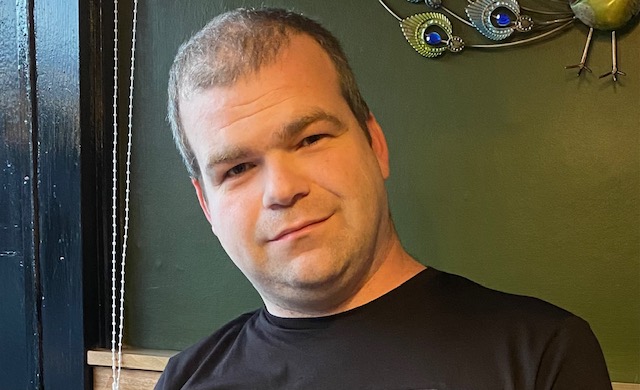
Image of Michael McEwan

As part of Cerebral Palsy Awareness Month, Michael shares his experiences of employment as an adult with cerebral palsy. 

March is Cerebral Palsy month, an opportunity to raise awareness for those all ages with lived experience of Cerebral Palsy(CP) across Scotland, showing the diversity of the CP community and share what matters to us all.

Every day is about raising awareness of disability, when we talk about various disabilities it’s not just a label, it’s important to look at the person, not the disability and focus on ability.

One of my biggest passion is employment for those with disabilities, the sad reality is the gap is getting wider, we may be aware in families or community, those people who would love to get a job, but not given the same opportunities.

According to the National Office of Statistics report last year, there were 53.6 %  with disabilities in employment, compared with 82.5% without disabilities.

In 2020 the employment rate was 53.4% so very little growth or development in four years, with existing barriers , employers should look beyond people disability, and look at what a candidate can bring to the job.

Because as we know all we have all got some kind of talent we just need a change to showcase and ok people may need a bit of support but we all need a bit of support one way or other.

I have experience of my struggle into employment, each time I met barriers, I was more determined to prove people wrong, many doubted I’d become a journalist but here I am, not the conventional route, but as freelancer I can make my own career, and still focus on my advocacy work.

My advice is never lose focus on what u want to do in life, from an early age wanted to be a journalist, was told by many people it’s not the job for me, twenty years on, that’s my chosen career and I love my job.

I often wonder if I didn’t have a disability then would my path have been shorter and easier, but then perhaps I wouldn’t have the same determination.

Society now  is opening doors slightly for people with a disability, but when we talk about employment there are many barriers, I didn’t realise we would be talking about this in 2024, when I speak at different events , the story is the same.

In reading this article I would like employers to acknowledge the need for change, see people for their own merit and don’t just categorize them.

If you are an employer and would like to better support people with disabilities at work,  please visit – Talking about disability – Supporting disabled people at work – Acas
Tags: Advice Information and Support, Advocacy Services, Cerebral Palsy, Disabled People, Employability Services, Physical Disabilities, Support for Adults, Support for Young Adults

Joseph’s journey: living with Dyskinetic Cerebral Palsy – Danielle McKay

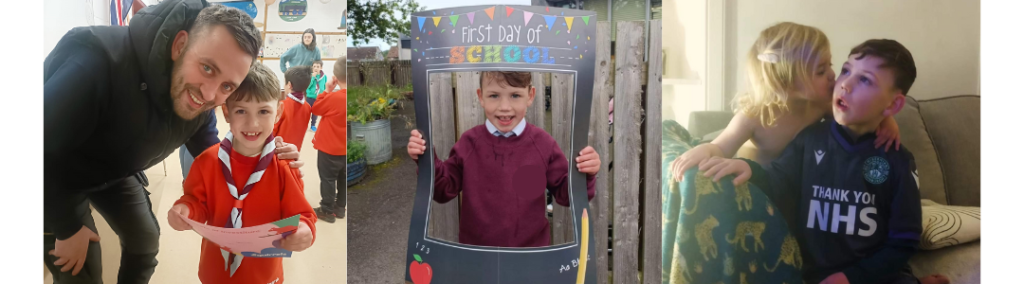
As part of Cerebral Palsy Awareness month, Danielle shares her experiences as a parent of her son Joseph who has cerebral palsy.

Our son Joseph was diagnosed with dyskinetic cerebral palsy when he was four, he’s now 6. He loves going to football games and riding his bike and has the cheekiest outgoing personality.

There are many causes for cerebral palsy, in Joseph’s case his brain temporarily didn’t get enough oxygen (asphyxiation) during a difficult birth. An MRI confirmed permanent brain damage when he was a few days old.

Cerebral palsy can affect movement and muscles (e.g. tongue, lips and jaw) needed to produce speech. Joseph can verbally communicate most of the time but also uses others ways to communicate like sign language and symbol pictures as he’s not always understood. The biggest challenge is when Joseph is upset when he’s not understood, this can be really difficult when he becomes upset and frustrated. But his speech is becoming clearer ever day and has constant support from his speech therapist. Even his friends and school teacher love learning sign language too which makes Joseph feel even more included and boosts his self esteem.

Joseph has difficulties with fine motor control in his hands and can struggle to do certain tasks, like dress himself or open book pages but Joseph has a great occupational

therapist who always makes sure we’re doing activities and he is smashing his goals.

We were very lucky to attend Cerebral Palsy Scotland Fife Outreach programme for one week of intense therapy last year. It was the first time Joseph was able to use a fork and knife all by himself cutting up things. He looked at me with the biggest smile on his face. It was the best feeling. It highlighted the fact that he can achieve anything he put his mind to, the experts at Cerebral Palsy Scotland gave him all the tools and support he needed to achieve this. I really admire the passion the therapists at CP Scotland have, we felt so lucky to have this time with them. We learnt so much about Joseph we didn’t know before. Joseph called the therapy rooms the games room and couldn’t wait to go back.

Joseph is loving his local mainstream school and has the most amazing group of friends. He’s absolutely thriving and loving life. His friends are so supportive and understanding of Joseph. I feel it’s really important to talk to children about different disabilities and as a parent I would always welcome any questions that any adult or child had and encourage parents to speak to their children about disabilities. I would say to other adults not to be scared or feel judged, children are curious too and that’s okay! It’s okay to not know the answer, not even us as parents know the answer sometimes! Just being open and honest can be super helpful and we can all learn from each other.


It can sometimes feel lonely parenting a child with a disability and you can often wonder if you are making the right choices and stuck worrying about the future. Trying to be as open as possible and seeking support when you really need it I feel is important. ❤️

. 

Tags: Advice Information and Support, Cerebral Palsy, Communication Support, Support for Carers, Support for Families

Cerebral Palsy Awareness Month – Make your voice heard

The Cerebral Palsy Scotland logo. Text reads, March is Cerebral Palsy Awareness Month.

March is Cerebral Palsy Awareness Month. Keep an eye on our social media channels, where across the month  a team of volunteer content creators will be sharing their lived experience of cerebral palsy – talking about their day-to-day lives, and sharing tips and thoughts on what needs to change so that every person with cerebral palsy can achieve their potential.

Be a part of the change this March

  • Like, share and comment on the content from Cerebral Palsy Scotland on your own social media channels – we want as many people as possible see the content so we can raise awareness of cerebral palsy
  • Create your own content on social media for Cerebral Palsy Awareness Month – be sure and tag us in your post, and use the hashtags #TeamCPScot and #CerebralPalsyAwarenessMonth
  • Raise awareness at your school by hosting a class session or assembly. Download our short PowerPoint presentation aimed at primary schools, explaining what cerebral palsy is and how it affects each person who has it differently. You can also visit our All about cerebral palsy webpages for general information.

Get moving for March – join our Walk ‘n’ Roll virtual challenge

Why not get moving for March and join our Walk ‘n’ Roll virtual challenge. Set yourself a challenge in a way that works for you – using your wheelchair or powerchair, walking frame, frame running bike, trike, feet, or body!

The Walk ‘n’ Roll challenge will help to raise vital funds to power our work so that every person with cerebral palsy in Scotland can reach their full potential.

Talking to my child about cerebral palsy

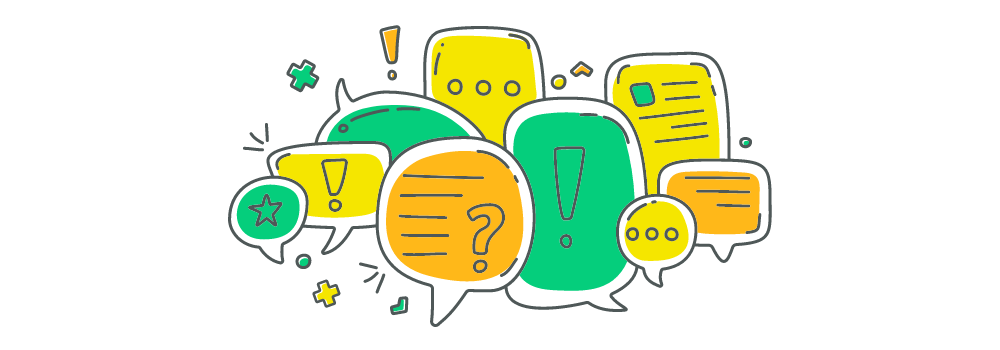
A graphic showing different speech bubbles. Some have exclamation marks and question marks. Other have lines to suggest words.

This information leaflet written by our Chartered Psychologist, Dr Kirstie Rees, gives parents advice and guidance on how to talk to their child about cerebral palsy.

The leaflet covers:

  • Why it’s important to talk to your child about cerebral palsy
  • When and how to talk to them about cerebral palsy
  • Using the right approach for your child
  • Developing your child’s coping skills

Read ‘Talking to my child about cerebral palsy’

How my cats help me

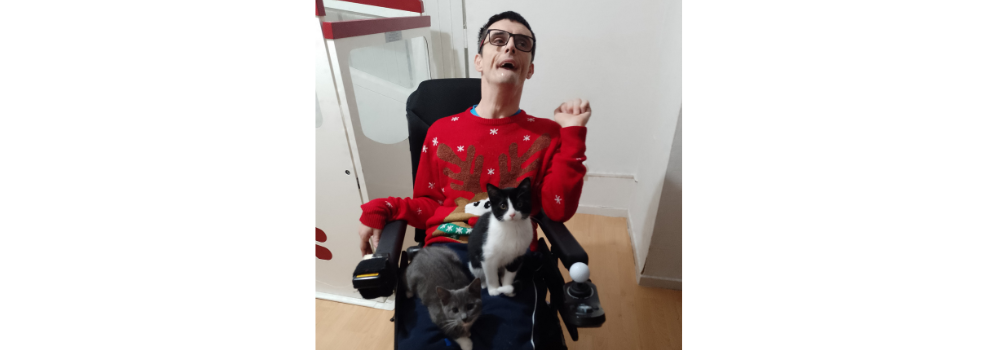
Photo of Barry. Barry is a man in his 40s. He is a wheelchair user. Two kittens are sitting on his lap.

In this blog, Barry talks about how important his pets are to him, the impact of losing his cat Ruby, and getting new kittens.

Who I am and why I am writing this

My name is Barry Smith, and I am 44 years old, I have cerebral palsy which is a physical disability. Down to having this, I am in a power wheelchair, and I use Lightwriter which is a communication aid. I  live by myself. Four weeks ago I saw my nine-year-old cat was very ill so me and my Mum took her to the vet with one of my P.A.

The outcome of seeing the vet

When we saw the vet she saw Ruby were ill. The vet told me there were two things we could do, which are send her for blood tests or put her to sleep, she was at the vet the week before with the same thing. I asked the vet what would you do if you were me. She told me I would personally put it to sleep because she was in so much pain, As soon as I heard this I asked the vet can you do it today. I loved her so much I didn’t want her to be in any pain but could I have a few minutes to say goodbye to her. The vet were happy to do this for me. When I had a few minutes with my sweet Ruby I thanked her for being my cat and told her to go off to the sky without any pain but felt so sad. The vet asked do I want her pawprint. I said yes please and she then asked do I want her ashes back in a little cat vase I said yes please because she would be coming home with me.

Saying to to Ruby my cat and how I felt

When the vet came back into the room and my mum petted Ruby I were heart break because I knew I wouldn’t be able to pet her again. The vet put it in to send her to sleep. I were so upset and I cried which isn’t like me but I knew she had a happy life. As soon I came out of the vet I knew I wanted a little kitten but I knew I needed time to get my head around what happened to my little Ruby. As soon I got home I knew I wanted a little kitten.

Twelve days later

I got a 8 week kitten, but this time it was a little boy who was a black and white kitten, same as Ruby. As soon as I saw him I loved him but I had no name for him for five days, because I wanted a name I could say and people could understand what I was saying without me using my communication aid all the time. The next few days I play with him and I work out how I can give feed myself.

I personally remember feeling like I won the lottery because I felt so happy, but I still miss little Ruby. Then I thought to myself what do you think Ruby would tell me to do she would think “Standing by your boy kitten and give him all the love you gave me over 9 years.” Just then I said a name so everyone could understand what I was saying what was Leaon, I like that name so I called him Leaon and I can say it Leaon and I love him so much. A few days later I made up my mind to get one more. At first I was going to get a boy but got a girl and call her Amy. Now my family is my kittens and I love them so much although Ruby will always be in my heart.

  • « Go to Previous Page
  • Page 1
  • Interim pages omitted …
  • Page 12
  • Page 13
  • Page 14
  • Page 15
  • Page 16
  • Interim pages omitted …
  • Page 60
  • Go to Next Page »

Search

Quick links

  • Ways to give
  • Our mission and values
  • All about cerebral palsy
  • Therapy for adults
  • Therapy for children
  • Campaigning

Copyright © 2026 · Enterprise Pro on Genesis Framework · WordPress · Log in

Cerebral Palsy Scotland logo

Cerebral Palsy Scotland
Bradbury House
10 High Craighall Road
Glasgow, G4 9UD

t: 0141 352 5000
Phone Number for Cerebral Palsy Scotland
Fax Number for Cerebral Palsy Scotland
info@cpscot.org.uk
Email for Cerebral Palsy Scotland
cerebralpalsyscotland.org.uk
Website for Cerebral Palsy Scotland

  • Facebook
  • Instagram
  • LinkedIn
OSCR logo
Nationa Lottery Community Fund logo